Usually strong
Articles in respected publications
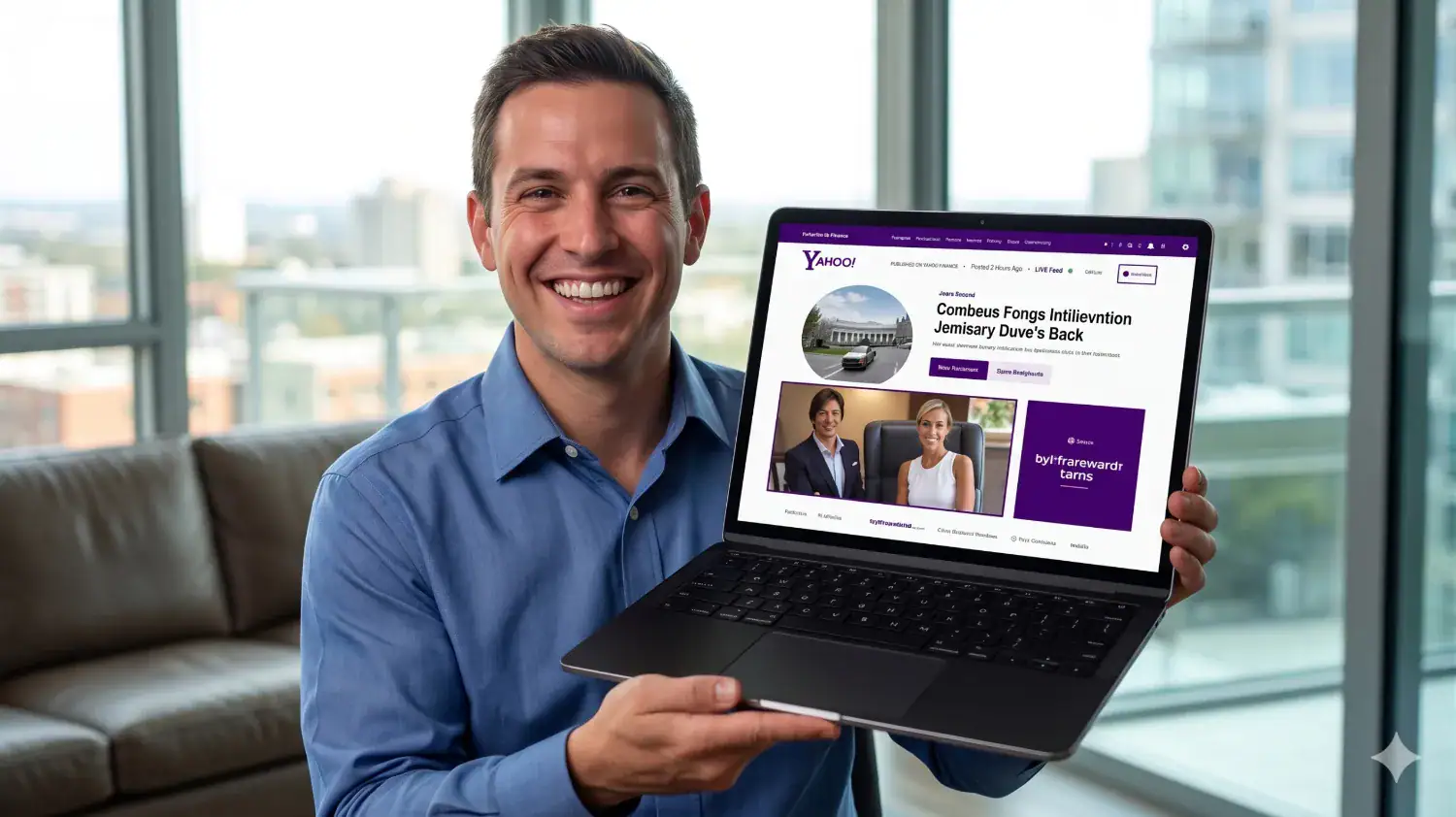
Interviews, profiles and expert columns on high-authority news sites often rank well for a name and carry real credibility with readers.



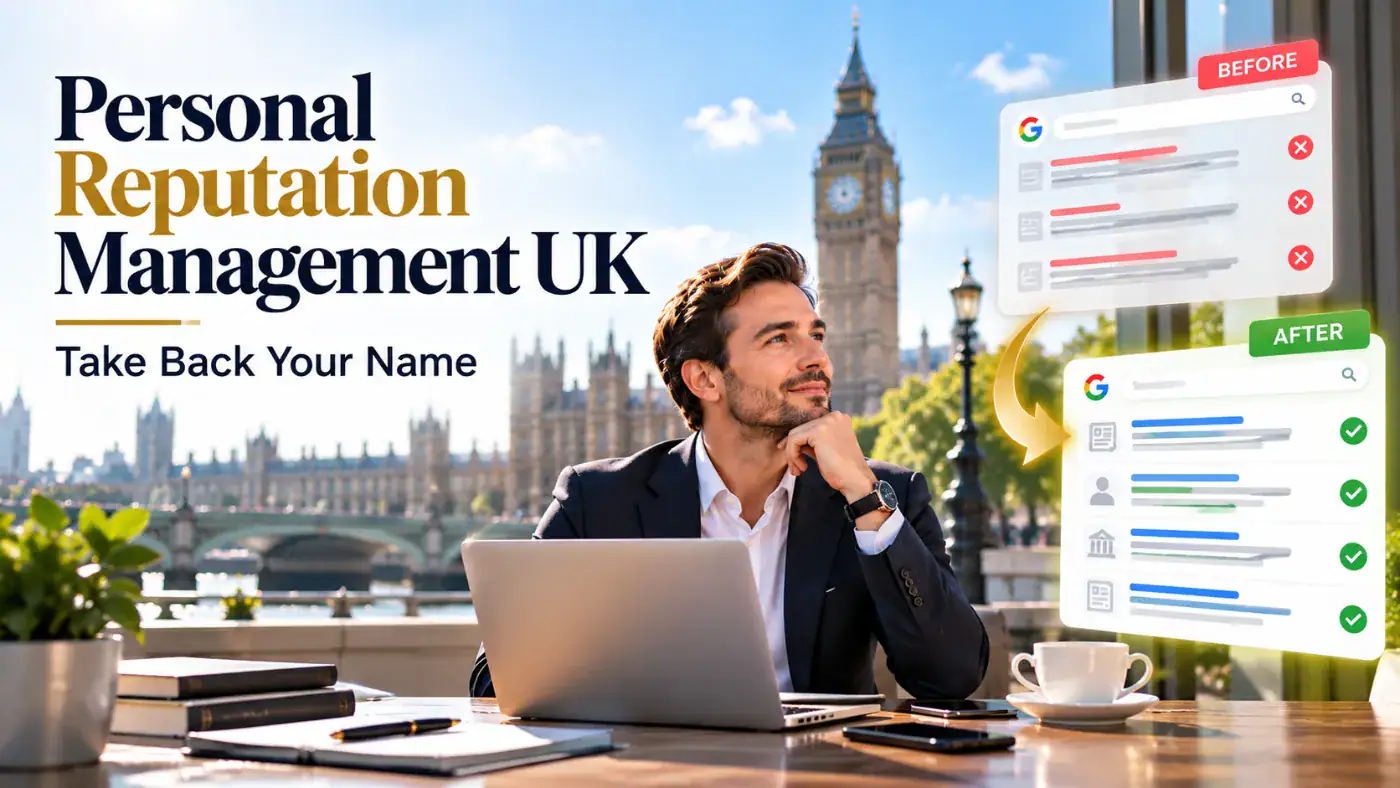
You are more than the worst thing Google says about you.
One old article, an angry review, a post written by someone who wanted to hurt you. It sits at the top of your name, and everyone who searches you sees it first: employers, clients, investors, even new friends. Our personal reputation management service helps individuals in the UK and around the world remove what can be removed, correct what is wrong, and build a truthful first page that shows who you really are today.
Personal reputation management is the work of changing what people find when they search your name. It combines removing content that breaks the law or a platform’s rules, asking search engines to delist results you have a legal right to remove, correcting inaccurate reporting, and publishing accurate, positive content that ranks above what remains.
It works best when it is honest. Not everything can be deleted: lawful, accurate journalism about your public role usually stays online. But almost everyone can change what appears first, and that is what most people actually see. Studies of search behaviour consistently show that few people look beyond the first page of results, which is why the first page of your name matters so much.
At United Press we have worked in PR since 2001. We combine removal and delisting requests with something most reputation firms cannot offer on their own: real articles in respected publications, so the new first page of your name is built on credible, independent sources.
Running a business with a company-wide issue? See our online reputation management service instead.
Most people never find out what a negative search result has cost them. The client who chose someone else does not explain why. The recruiter simply stops replying. The investor becomes “busy”. The date goes quiet.
That silence is what makes reputation damage so hard to live with. You can feel it working against you, but you cannot see it, and you cannot answer it.
Searching someone’s name before a meeting, a hire or a first date is now routine. Many employers check candidates online, and buyers check suppliers before they sign. Whatever they find first becomes their first impression of you, often before you have said a word.
The good news is that the first page of your name is not fixed. Search results change as new, stronger content appears, and as outdated content is removed or delisted.
Every situation has a different route. Choose the one closest to yours to see what is usually possible, what is not, and how we would approach it.
This is the most common reason people contact us. A story from years ago still ranks first, often without the outcome: the case that was dropped, the business that recovered, the accusation that was never proven.
An untrue review or an anonymous thread can damage a professional reputation built over decades, especially when it sits next to your name in search results.
Fake profiles, blog posts, repeated comments or a coordinated campaign by one person. It is exhausting, and it can feel impossible to escape.
Seeing your address or phone number next to your name online is frightening, especially if someone has posted it to harm you.
It is not your story, but it appears when people search for you. Clients and employers may not realise it is someone else.
AI assistants now summarise people as well as companies. If the sources they read are outdated or negative, the summary will be too.
There is no single trick. Lasting results come from using the right route for each search result, starting with the strongest and most permanent.
Ask the website, platform or author to take content down when it breaks their rules or the law. If it is gone at the source, it is gone everywhere.
Example: a review that breaks a platform’s content policy.
Ask Google and other search engines to stop showing a result for your name, using UK GDPR rights or their own privacy policies. The page stays online but stops appearing for your name.
Example: an outdated article about a matter long since resolved.
Ask publishers to update, anonymise or add context, and use the press regulator’s complaints process where reporting was inaccurate.
Example: a story that never reported that charges were dropped.
Publish accurate, positive content about you on strong websites, so it appears above what cannot be removed. This is where respected media coverage matters most.
Example: a feature interview and expert column in national titles.

Removal and delisting decisions are made by the website owner, the platform or the search engine, not by us. We prepare strong, well-evidenced requests and tell you honestly what is likely.
We would rather you start with the free steps. Some problems are solved in an afternoon. If they are not, you will come to us knowing exactly what is in the way.
You do not need an agency for every problem. You probably do if any of these sound familiar.
Every case is different, but the shape of the work is the same. You will always know what we are doing, why, and what it costs before we start.
Everything you tell us is treated in strict confidence. Many of the people we help are going through one of the most stressful periods of their lives, and we never forget that.
Start With a Free Name Check →

We review the first pages of Google for your name and its common variations, note every negative or inaccurate result, and check what AI assistants say about you.
For each result we recommend a route: remove, delist, correct or outrank. We explain what is likely, what is not, and the fixed cost of each step.
Platform reports, publisher letters, search engine delisting requests and press regulator complaints, each built around the specific rules that apply.
Interviews, profiles and expert articles in respected publications, plus help with your own website and profiles, so accurate content ranks for your name.
We recheck your results and AI answers so you know if anything new appears and can act quickly.
People rarely search your name in only one way. Our assessment checks the variations that real employers, clients and journalists use, because a problem hidden in one search is often obvious in another.
You receive a plain-English summary of what we found, what can be done for each result, and a fixed price for anything you choose to go ahead with.
When something painful appears online, the urge to fight it immediately is completely human. Unfortunately, some of the most natural reactions give the negative content more life, not less.
If you have already done some of these, do not worry. Almost every situation can still be improved; it may just need a more careful plan.
Every name is different, and some results move faster than others. This is the typical shape of a personal reputation campaign, so you know what to expect and when.
Free assessment, plan and fixed prices agreed. Removal, delisting and correction requests prepared and filed. Your own profiles updated.
You know exactly where you stand.
First responses arrive from platforms, publishers and search engines. Your first articles are written, approved and published.
Guaranteed placements go live within 14 days of approval.
Search engines find and begin to trust the new content. Positive results start to move up for your name and its variations.
We report what has changed and what is next.
Further coverage fills the first page. Remaining negative results are pushed lower, and AI answers are rechecked.
You start to feel the difference.
Timings depend on how competitive your name is and how quickly third parties respond. We never promise a fixed ranking position, because no one controls Google’s results.
Outranking a negative result is not about volume. It is about having several strong, trusted pages that are clearly about you. These are the assets that tend to work, and how strongly they usually rank.
Usually strong
Interviews, profiles and expert columns on high-authority news sites often rank well for a name and carry real credibility with readers.
Usually strong
A simple site at your name, with a biography, your work and contact details, gives search engines a clear source about you.
Usually strong
LinkedIn and well-known professional directories often rank for full names, especially when complete and up to date.
Helpful
A Google knowledge panel can help present verified facts about you. Our Google knowledge panel service explains how they are triggered.
Helpful
Appearances on podcasts, panels and events create pages and videos that rank and show your expertise.
Helpful
Active, professional social profiles can fill the lower half of page one, as long as they are consistent with everything else.
Strong publications rank well and carry trust, which is why they are the backbone of most personal reputation campaigns. These are examples from our UK and international inventory, with Domain Authority (DA, Moz) and Domain Rating (DR, Ahrefs), so you can see the strength of each site before you choose.
| Publication | DA / DR | Good for | Label & link |
|---|---|---|---|
| The Independent | 94 / 91 | Founder and personal profiles | Sponsored · no-follow |
| Business Insider | 94 / 92 | Business leaders and entrepreneurs | Confirmed when you order |
| Yahoo Finance, AP News & Benzinga | 94 / 92 | Executives and company news | Confirmed when you order |
| The Sun (UK) | 94 / 89 | Wide public reach | Discreet label · no-follow |
| Evening Standard | 93 / 89 | London professionals and founders | Sponsored · no-follow |
| The Times | 92 / 91 | Senior leaders and experts | Discreet label · do-follow |
| Entrepreneur (UK) | 92 / 91 | Founders and business stories | No label · do-follow |
| IB Times UK | 90 / 82 | Business and international profiles | Confirmed when you order |
| New Statesman | 83 / 84 | Thought leadership | Confirmed when you order |
| Female First | 78 / 72 | Lifestyle and personal stories | Confirmed when you order |
| Mark Meets | 64 / 78 | Interviews and profiles | Confirmed when you order |
| London Loves Business | 59 / 72 | London business leaders | Confirmed when you order |
| London Insider | 57 / 71 | London personalities | Confirmed when you order |
DA and DR are third-party estimates of a site’s link strength and change over time. Labels and link types are set by each publication. Inventory changes, so we confirm availability before you order. Want to go further? Our executive PR services build a long-term profile for leaders.
Many firms can file a removal request. Far fewer can also put you in front of readers in respected publications. That combination is what makes a first page change, and stay changed.
Experience
We have spent more than two decades working with journalists and editors, so we know how publications think and what they will and will not change.
Coverage
You choose from real UK and international titles, with DA, DR, label and link type shown before you order. No vague promises.
Certainty
Every guaranteed placement goes live within 14 days of your approval, or you receive a 100% refund.
Control
Nothing about you is published without your approval. Our writers work in each publication’s style, and you sign off the final article.
Honesty
If something cannot be removed, we say so, and explain the next best route. If a free step will solve it, we tell you that first.
Discretion
Your situation is handled by a dedicated team, and never discussed with anyone outside it without your permission.
Want to understand the wider picture first? Read what online reputation management is, then come back when you are ready.
Knowing your rights helps you choose the right route. This is a plain-English summary, not legal advice; for legal action, speak to a solicitor.
You can ask organisations, including search engines, to erase or delist personal data about you in certain circumstances, for example when it is no longer necessary or is processed unlawfully. Requests are balanced against freedom of expression and the public interest.
Best for: outdated or irrelevant results about a private individual.
The Act says a statement is not defamatory unless its publication has caused, or is likely to cause, serious harm to your reputation. Claims generally need to be brought within a year of publication. Read section 1 on legislation.gov.uk.
Best for: false statements of fact that are clearly damaging.
The Independent Press Standards Organisation (IPSO) handles complaints about most UK newspapers and magazines. It asks for complaints within four months of publication, or up to 12 months for articles still online, depending on the circumstances (IPSO: how to complain).
Best for: inaccurate reporting or intrusion by a member publication.
Every major platform publishes rules on fake reviews, harassment, impersonation and private information. Google also lets people request removal of results that show personal details such as addresses, phone numbers and ID numbers (Google Search Help).
Best for: reviews, posts and exposed personal details.
Summaries checked October 2026. Laws and policies change, so we confirm the current position for your case.
The goal is always the same: when someone searches your name, they should see an accurate picture of who you are now. How we get there depends on your work.
Investors and partners search you before every meeting. We help your first page reflect your track record, not one bad year.
Before a promotion, appointment or board role, we make sure your name tells the right story.
One unfair review can sit above years of good care. We assess what can be removed and build trusted professional profiles.
Your reputation is your business. We help clients find your expertise first.
When coverage is misleading or a post goes viral, we help you correct the record and move forward.
Job seekers, people named in old stories and those targeted online. You deserve a fresh start too. In London? See our reputation management London team.
The tools overlap, but the goals and the rules are different. Knowing which you need helps you choose the right service.
| Personal reputation management | Business reputation management | |
|---|---|---|
| Main search | Your own name | Your company or brand name |
| Typical problems | Old news, personal attacks, exposed private details, shared names | Customer reviews, employee reviews, product complaints, negative press |
| Privacy rights | Strong: UK GDPR rights apply to individuals | Limited: companies usually cannot use the right to be forgotten |
| Best new content | Interviews, profiles, expert columns, personal website | Company news, case studies, reviews, brand features |
| Confidentiality | Usually essential | Often shared with a wider team |
| Our service | This page | Online reputation management services |
You will hear these words a lot when you look into cleaning up your name. Here is what they actually mean.
Repairing your reputation is one thing. Keeping it strong is easier, and much cheaper, than fixing it again later. These habits help most people stay in control of their first page.
A trustworthy firm will answer all six clearly and in writing. We are happy to.
Some reputation shortcuts make things worse: they create new headlines, break platform rules or breach Google’s spam policies. Your name deserves better than a quick fix that backfires.
Cost depends on how many results need attention and which routes apply. Many firms charge a monthly retainer for months at a time. We prefer to price each piece of work so you know exactly what you are paying for. For wider context, see how much PR costs in the UK.
A confidential review of what appears for your name and what is likely to be possible.
Prepared requests to platforms, publishers, search engines and the press regulator, priced per result before we start.
Interviews, profiles and expert articles in named publications, with DA and DR shown before you order.
days: every guaranteed placement goes live within 14 days of your approval, or you receive a 100% refund. No retainer, no hidden extras.
You do not need to prepare a long file. A few minutes on the form below is enough for us to start your free assessment. If you have more, it helps us move faster.
We review your name in confidence and reply with a clear, honest assessment: what can be removed, what can be delisted, what can be corrected, and what we recommend building. Each step comes with a fixed price, and you decide what to go ahead with.
If your situation needs a solicitor rather than a PR agency, we will tell you. If it can be solved with a free step you can take yourself, we will tell you that too.
Clients come to us from across the UK and from every country. Our team works from Brook’s Mews, Bond Street, London.
It is the work of improving what people find when they search your name online. It combines removing content that breaks rules or the law, delisting results you have a right to remove, correcting inaccurate reporting, and publishing accurate content that ranks above what remains.
Sometimes. Google may remove results that show personal details such as your address, phone number, email, ID numbers or bank details, and under UK GDPR you can ask it to delist results for your name that are inaccurate, outdated or no longer relevant. Google decides each request, and the page itself stays online unless the website removes it.
Search your name in a private window, list every negative result, update the profiles you control, ask website owners to update or remove content, use Google’s removal options and your UK GDPR rights, and publish accurate, positive content on strong websites so it ranks above anything that remains.
Accurate reporting in the public interest is rarely deleted. But publishers often agree to update, anonymise or add the outcome, Google may delist outdated articles for your name under UK GDPR, and inaccurate reporting can be raised with the press regulator. Our right to be forgotten guide explains the process.
Some requests are decided within weeks. Building new results that outrank older content usually takes a few months, because search engines need time to find and trust new pages. Our guaranteed placements go live within 14 days of approval.
It depends on how many results need attention. At United Press the assessment is free, removal and delisting work is priced per item before we start, and positive coverage is a fixed price per publication with no retainer.
Yes, when it is done honestly. Publishing accurate, positive information about yourself is legal and normal. What is not acceptable is fake reviews, false content or spam, which can break platform rules and Google’s spam policies. We never use them.
Reviews that break a platform’s rules, such as fake, abusive or conflict-of-interest reviews, can usually be reported for removal, and false statements that cause serious harm may have a legal route. Honest opinions from real customers are generally kept, so we also help you respond and rebuild.
Nobody can edit an AI model directly, but AI answers are built from sources. Correcting inaccurate sources and publishing accurate, authoritative information about you gives AI assistants better material, and we recheck the answers over time.
Your case is handled in strict confidence. Articles are published by the publications themselves, and some carry a sponsored label set by the publisher. We tell you the label for every outlet before you choose.
Yes. The UK is our home market, and we help individuals from every country, placing coverage in UK and international publications. Delisting rights vary by country, so we check what applies to you.
No. We are a PR and reputation agency, not a law firm. We explain your options in plain English and, where legal action may be needed, we recommend speaking to a solicitor.
You have grown, learned and moved on. But every time someone types your name, they meet the version of you from your worst day. It is unfair, it is exhausting, and it quietly closes doors you will never even know about.
It does not have to stay that way. Some of it can be removed. Some of it can be corrected. And everything else can be outweighed by the truth about the person you are today.
Imagine searching your own name next season and feeling proud of what you see.
Tell us what is happening on the short form below. We will review your name in confidence and send you an honest, free assessment of what can be done, and what it would cost.
United Press · Brook’s Mews, Bond Street, London W1K 4HA · 07447 882377 · In PR since 2001 · Clients in the UK and every country