Best PR Agency UK 2026
United Press · The Media List
Most agencies will not tell you where they place until you have signed. This is our inventory, in the open — UK nationals and regionals, US metro papers, financial and investor titles, international press, broadcast segments, print covers and the publications AI assistants actually cite. Browse it before you speak to anyone.
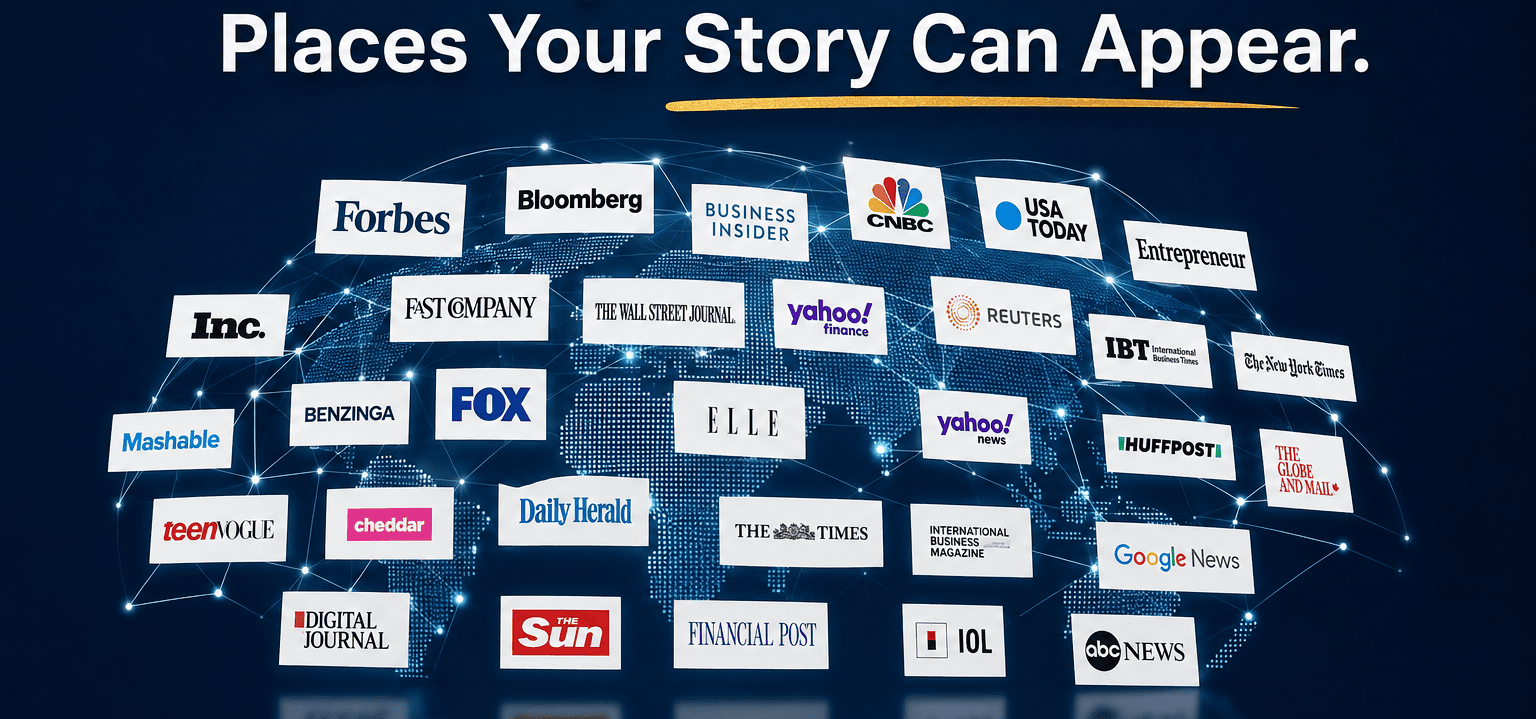
Titles that appear across the list
Start Here
A long list is not a shortlist. The useful question is never “which publication is biggest” — it is who has to believe you, and what they read. Find your situation below.
The right category is decided by your audience, not by domain authority. A regional paper your customers read every morning will outperform a global masthead they have never opened. Match the reader first; sort by authority second.
Financial & investor media. Investors and their analysts check what has been written about you before a first meeting and again during diligence. Yahoo Finance, Business Insider, Benzinga and the wires are the names they recognise — and several of these routes move quickly.
UK national and regional press. The Sun, The Independent, Evening Standard, The Times and the regional network beneath them. If your customers are within thirty miles, the regional title beats the national every time — and it is far easier to reach.
US newspapers and regional media. Metro and regional papers state by state, plus Apple News, Reuters and MSN. American buyers trust local mastheads in a way that does not translate from UK coverage.
The AI-visible titles. If ChatGPT or Perplexity cannot describe your company, it is because the sources they read do not mention you. We flag which outlets feed those answers so you can target them deliberately.
Trade, technology and business titles. Your buyer reads two or three publications about their own industry. Those beat any consumer national for lead quality, even at a fraction of the audience size.
Broadcast TV and interview segments. Affiliate segments across ABC, CBS, NBC and FOX markets. A short filmed segment is a credibility asset you can reuse on your own site indefinitely.
Lifestyle, fashion and luxury. Titles where taste and desirability are the story. This is brand-building coverage rather than lead generation, and it should be judged that way.
Filter by turnaround before anything else. Wire and news routes move fastest. Broadcast takes longer. Print magazines need months because of production schedules. A date narrows the list faster than a budget does.
Not sure which applies? Describe the outcome you need in the form below and we will map it to specific titles — including telling you when PR is not the right lever at all.
Categories
Every category below is a real, working route to coverage. Availability, turnaround and fit are confirmed against your brief before anything is agreed.
The papers your customers actually read on the train.
National & regional · mostly indexed & AI-visible
The names an investor recognises before you finish the sentence.
Wires, markets & investor titles · fast routes available
Metro and regional papers, state by state, city by city.
Nationwide coverage · strong AI visibility
Local language, local buyers, across many markets.
Europe, Middle East, Asia, Canada & Australia
The deep bench for search authority. Gated — enquiry only.
Available on enquiry
Minutes on screen, yours to reuse forever.
ABC, CBS, NBC & FOX affiliates · Zoom or in-person
Where taste is the story and desirability does the selling.
Consumer brand-building · largely AI-visible
Culture, talent and the titles that break careers.
Film, music, gaming & sport
Read by developers, CTOs and the people who sign for software.
Technical depth · high AI visibility
A sensible way in when the story is small and the budget is tight.
Entry tier · mostly indexed
Placements that surface in the Google News feed itself.
Feed visibility
A post from an account with a real audience. Not an article.
Established magazine & news accounts · post only
One release, syndicated across a wide network of outlets.
Syndication routes
A filmed interview you own and can use on your own site.
Reusable video asset
We will tell you when a title is not worth buying. A publication with no relevance to your buyer is not made valuable by its domain authority.

Named Titles
A sample of the mastheads we work with. Availability and suitability are confirmed against your brief — being listed is not a promise that a given editor will run your story.
This is a selection, not the full inventory. The complete list for any category is available on request, and category pages are being published in order of priority.
How to Read It
Every placement carries the same six attributes. Between them they answer almost every question a buyer has — and they are why two campaigns with identical budgets can produce completely different results.
From days to months. Wire and news routes move fastest; print magazines need the longest lead time because of production schedules; broadcast sits in between. If you have a date to hit, this filter decides the shortlist before any other.
Article, interview, listicle entry, social post, broadcast segment, full-page print, two-page spread or front cover. A social placement is a post, not an article — a distinction some suppliers blur and we state plainly.
Whether the placement is indexed by search engines and therefore findable later. Not every valuable placement is indexed — a broadcast segment is worth having regardless — but you should know which you are buying.
Whether the outlet is one that AI assistants draw on when answering questions. We flag it per title, because it is the single fastest-moving factor in media selection right now.
UK, US, or international markets, many in local language. Relevance beats authority here: a regional title your customers actually read outperforms a global name they do not.
Some titles accept health, crypto, CBD, gambling or other regulated categories; many do not. We filter for this at the start rather than discovering it after a rejection.
AI Search
When someone asks ChatGPT, Perplexity, Gemini or Google’s AI Overviews about your market, the answer is built from published sources. Which publication you appear in now decides whether you are part of that answer.
Domain authority and AI visibility are different things. Some high-authority outlets are rarely drawn on by assistants; some mid-tier trade titles are cited constantly because they are specific, well-structured and trusted in their niche.
A model resolves your company to an entity. Where your name, sector, location and description match across several published mentions, it can answer confidently. Where they conflict, it hedges — or names a competitor instead.
No agency controls what a model says, and any guarantee of an AI citation is not a real commitment. What is controllable is the published record those models read. That is what the AI-visible flag is for.
Related reading: how to rank in AI search · AI SEO · what is AI SEO
The Process
How a brief becomes a placement.
Most briefs open with a publication name. We start a step earlier: who has to see this, what do you need them to believe, and by when. That determines the category before any title is picked.
You get a named list — specific titles, with turnaround, format, indexed and AI-visible status shown. You approve it before anything is sent. Nothing goes out against a list you have not seen.
The story is written or shaped for the outlets on the list. Editorial outreach and clearly-labelled syndication are handled separately and reported separately — never blended into one number.
You pay when the placement is live, not in advance of it.
The Comparison
Why we put the inventory in the open.
| A typical agency | UnitedPress | |
|---|---|---|
| The inventory | Hidden until you sign | Published in the open |
| The shortlist | “Top-tier media”, unnamed | Named titles, approved by you first |
| Editorial vs syndication | Blended together | Separated and reported separately |
| Turnaround | Vague | Stated per title before you commit |
| AI visibility | Not considered | Flagged per publication |
| Restricted niches | Discovered after rejection | Filtered at the shortlist stage |
| When you pay | Up front | On publication |
We will also tell you when a placement is not worth buying. A title with no relevance to your buyer is not made valuable by its domain authority.

FAQ
The questions buyers ask about the list.
It is our placement inventory, published openly: the categories we work across and the publications within them. It spans UK national and regional press, US metro and regional papers, financial and investor titles, international outlets, broadcast TV segments, print magazines and high-authority domains. Each entry carries its turnaround, format, indexed status, AI visibility and which restricted niches it accepts.
Because you cannot judge an agency on adjectives. “Tier-one media” means nothing until you see which titles are actually behind it. Publishing the inventory lets you check we can reach your buyers before you spend anything, and it makes the shortlist conversation concrete rather than aspirational.
No. Editors decide what runs, and any agency claiming otherwise about editorial coverage is describing paid placement instead. What we commit to is the named shortlist agreed with you, the outreach behind it, and clear reporting on which placements were editorial and which were clearly-labelled syndication.
Start from who has to see the coverage. Investors and lenders point to financial and investor media; UK consumers to UK national and regional press; a US launch to the US regional network; a technical B2B buyer to trade and technology titles. If you are not sure, describe the outcome and we will map it.
It flags publications that AI assistants such as ChatGPT, Perplexity, Gemini and Google AI Overviews draw on when composing answers. It is not the same as domain authority — some high-authority sites are rarely cited, and some specialist titles are cited constantly.
It depends entirely on the route. Some news and wire placements move quickly; broadcast segments take longer; print magazines need the most lead time because of production schedules. Turnaround is shown per title so you can filter by your deadline.
Many titles in the list do, and many do not — it is recorded per publication. We filter for it when building your shortlist rather than discovering it after a rejection. We also run dedicated practices for several of these sectors.
A social placement is a post from an established magazine or news account. It does not include an article on that publication’s website. We state this plainly because it is a distinction some suppliers leave ambiguous.
Yes. Category pages are being published in order of priority, and where one is not yet live we will send the relevant list on request. The high-authority domain list is enquiry-only because of its size.
On publication. You are billed once the placement is live rather than in advance of it.
Yes. Most placements need the story shaped for that specific outlet and its audience. Where you already have material, we will work with it rather than rewrite for the sake of it.
Tell us the outcome you need and your deadline. We will come back within a day with a named shortlist drawn from the list above, showing turnaround, format and AI visibility for each title so you can approve it before anything is sent.
Let’s Talk
Tell us who needs to see the coverage and by when. We will come back within a day with specific titles from the list — turnaround, format and AI visibility shown — for you to approve before anything is sent. No obligation.