Line managers
A former team member names you after a difficult performance conversation. You want it removed before your next promotion review.




It is your name, your career and your reputation. Not a talking point for anonymous strangers.
Finding yourself named in a negative Glassdoor review is a horrible shock. Colleagues read it. Recruiters find it. Sometimes it appears when people Google you. The good news: Glassdoor’s own rules do not allow negative comments about identifiable people outside a company’s top leadership. If you are a manager, team leader, HR professional or colleague, a review that names or identifies you will often break those rules. We help you prove it, get it removed, and protect your name everywhere else it appears.
Glassdoor allows reviews to name the people at the very top of a company, such as the CEO, founder, owner or other C-suite leaders, as long as the review is about their behaviour or performance at work. It does not allow negative comments about identifiable people outside that group. So if you are a manager, team leader, HR professional or colleague and a review names or clearly identifies you negatively, it is likely to break Glassdoor’s guidelines and can be reported for removal.
Glassdoor also says it does not allow reviews to include contact details about anyone, does not allow reviews that reveal the identity of a non-executive in an unwanted way, and does not allow insults, harassment or threats. Where a review breaks these rules, it can be flagged and taken down.
What Glassdoor will not do is take sides in a factual dispute. Its guidelines say it is a neutral platform that cannot judge who is telling the truth. That is why the way you report a review matters: the strongest reports point to a specific guideline the review breaks, not to whether the review is fair.
| Who is named | What Glassdoor allows |
|---|---|
| CEO, founder, owner, president, C-suite | Can be named if the review describes their behaviour or performance at work |
| Senior managers below the top team | Depends on their role; negative comments about non-executives are not allowed |
| Line managers and team leaders | Negative comments that identify them are not allowed |
| HR, recruiters and colleagues | Negative comments that identify them are not allowed |
| Anyone at all | No contact details, threats, harassment, insults or impersonation |
Based on Glassdoor’s published Community Guidelines. Glassdoor makes the final decision on every report.
Company reviews are meant to help job seekers understand an employer. When a review names an individual, it stops being about the company and becomes about a person, often someone who had no say in the decisions being criticised.
The people we speak to describe the same feelings: embarrassment walking into the office, worry that colleagues have read it, anxiety every time a recruiter gets in touch, and frustration that there is no way to reply as themselves.
It also has practical consequences. Recruiters and hiring managers increasingly look people up before an interview. A review that names you can quietly follow you from one job to the next, even if it is unfair, out of date or written by someone with a grudge.
Every one of these concerns can be addressed. The first step is understanding exactly which rules the review breaks.
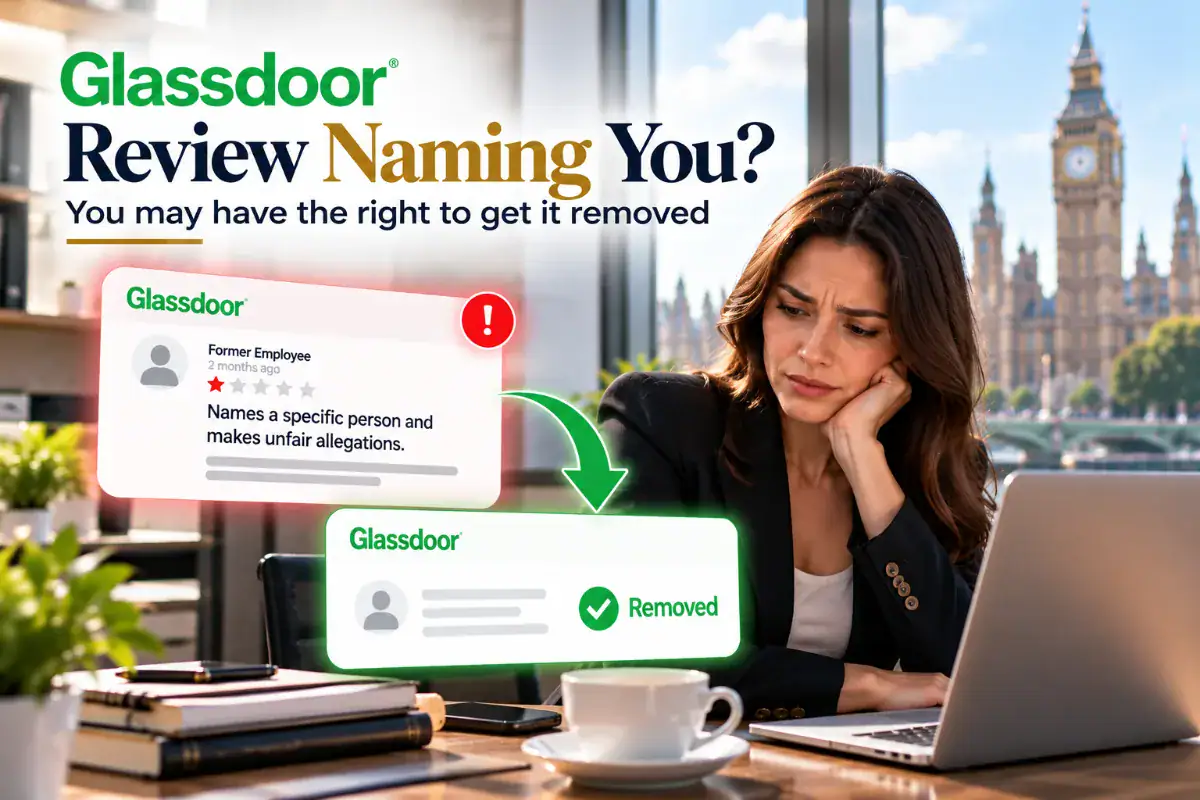
Answer five quick questions about the review. You will get an instant indication of how strong a removal request is likely to be, based on Glassdoor’s published guidelines.
Nothing you click is stored or sent anywhere. For a proper assessment of the actual review, send it to us on the form below and we will reply in confidence.
This is a guide, not a guarantee. Glassdoor decides every report.
Glassdoor’s Community Guidelines are long, but only a handful of them usually apply when a review targets an individual. Here they are in plain English, with what each one means for you.
| Guideline area | What it covers, in plain English | When it helps you |
|---|---|---|
| Naming executives | Only people at the very top, such as the C-suite, executive director, president, owner or founder, can be named, and only about their behaviour or performance at work | You are not in that group, and the review is negative about you |
| Privacy concern | Reviews must not reveal the identity of a non-executive in an unwanted or unwarranted way, or share personal or confidential information | The review identifies you or shares private details |
| Privacy and contact details | Reviews must not include contact information about the reviewer or anyone else | Your email, phone number or address is included |
| Targeted abuse and insults | Content intended to humiliate or degrade someone, and insults or profanity used to target others, are not allowed | The review attacks you personally rather than describing work |
| Safety concern | Wishes of harm, incitement of violence and similar content are not allowed | Anything that suggests a threat to you |
| Misinformation and impersonation | Users must not post misinformation or impersonate others | The review is clearly false, or someone is posing as you |
| Neutrality | Glassdoor does not judge disputes about facts or opinions between reviewers and employers | A reminder to report breaches, not disagreements |
Summary of Glassdoor’s Community Guidelines as published in October 2026. Guidelines can change, so we check the current wording for every case.
Glassdoor’s rule is about identifiable individuals, not only named ones. Reviewers often think they are being careful, but still make it obvious who they mean. These are the patterns we see most often.
“Sarah in accounts” or “J.M., the regional manager” can be enough when only one person fits.
“The head of HR” or “our only operations director” points to one person in most organisations.
“The new team lead in the Leeds sales office” can identify someone as clearly as their name.
Nicknames, personal traits or references to events only a few people know about can all make someone identifiable.
When you report a review that identifies you indirectly, explain clearly and calmly why the description can only refer to you. Evidence such as an organisation chart or job listing can help.
These made-up examples show how Glassdoor’s guidelines tend to apply. Real cases depend on the exact wording and context, which is why we check every review individually.
| Example wording (illustrative) | Likely outcome | Why |
|---|---|---|
| “My manager, Tom in the Bristol office, is a bully.” | Likely breach | Negative comment about an identifiable non-executive |
| “The head of HR ignored every complaint I made.” | Possible breach | Depends on whether the title identifies one person and their seniority |
| “The CEO makes decisions without listening to staff.” | Usually allowed | Top leaders can be named about behaviour at work |
| “The founder is a disgusting human being.” | Likely breach | Insults targeting a person, even a founder |
| “Management is disorganised and communication is poor.” | Usually allowed | Opinion about the company, no individual identified |
| “Contact Sarah on 07… if you want the truth.” | Likely breach | Contact details and identification of an individual |
| “My line manager J.K. should be sacked.” | Likely breach | Initials can identify a non-executive; negative comment |
| “Some team leaders favour their friends.” | Usually allowed | General comment that does not identify a specific person |
Illustrative examples only, written by us. Glassdoor decides every case.
A strong report is built on evidence, not emotion. Collect these before you flag the review or send it to us. It only takes a few minutes, and it can make the difference between a quick removal and a refusal.
Keep everything in one folder with dates. If the review is edited or removed and then reappears, you will be able to show exactly what was there.
Most people react in one of two ways: they panic, or they try to ignore it. Neither helps. A calm, well-documented report works far better, and it only takes an hour or two if you know what to include.
If you are an employee rather than the company, involve your employer early. Companies with a Glassdoor employer account can flag reviews directly on the site, and a joint approach is usually more effective.
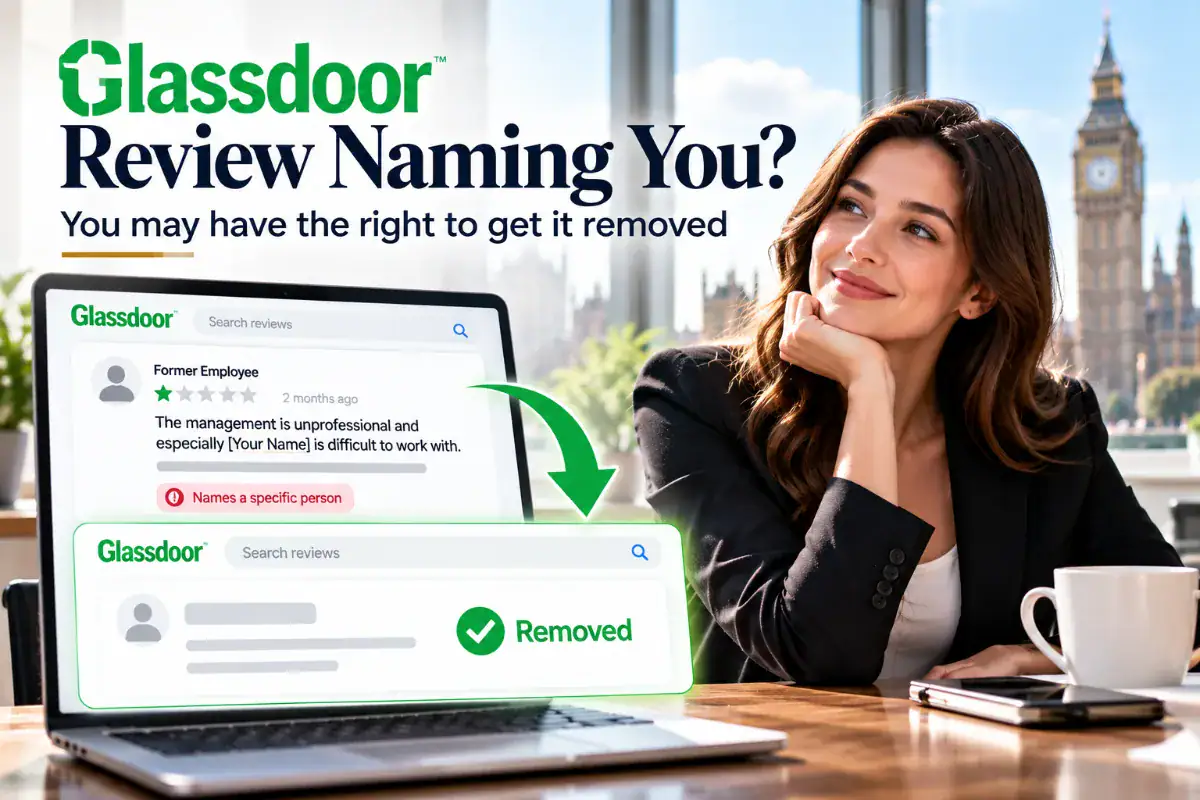
Take dated screenshots of the review, its URL and anything else that shows it, including Google results. Do this before anything changes.
Naming or identifying a non-executive negatively, revealing personal information, insults, harassment, threats or misinformation. One clear breach is stronger than a long list of complaints.
Use the flag or report option on the review. Glassdoor says that if a review violates its Community Guidelines or Terms of Use, you can flag it directly on the site.
Say which guideline it breaks and why. Avoid arguing about whether the review is fair; Glassdoor does not decide factual disputes.
If the review stays, consider a professional employer response, legal advice where the content may be defamatory, and steps to protect your name on Google.
Moderators read a lot of reports. The ones that succeed are short, specific and calm. They quote the part of the review that breaks the rules and name the guideline it breaks.
Use the template on the right as a starting point. Replace the highlighted parts, keep it under 150 words, and do not include anything you would not want the reviewer to read.
Not sure which guideline applies? Send us the review and we will tell you, free and in confidence.
Subject: Review identifies a non-executive employee
Hello, I am reporting the review titled review title, posted on date on the company name page.
The review makes negative comments about me / a member of our team, who is identifiable as name, initials or unique job title. This person is a job title and is not part of the company’s executive leadership.
Your Community Guidelines say you do not allow negative comments about identifiable individuals outside the executive group. The specific wording is: quote the sentence.
Please review this content against your guidelines. Thank you.
Sometimes a report is declined, or the review is edited but your role is still obvious. You still have choices, and some of them work better together.
If new evidence shows the review identifies you, or a further breach appears, a second, clearer report can succeed where the first did not.
Glassdoor says employers have the right to respond and to have the last word. A measured response can reassure readers without repeating the claims.
In England and Wales a statement is only defamatory if it causes, or is likely to cause, serious harm to reputation. Where a review contains damaging false facts, a solicitor can advise on routes such as a court order to identify the author. This is not legal advice.
Even if a review stays on Glassdoor, you can make sure it is not the first thing people see when they search your name, by building accurate, authoritative results above it.
Glassdoor says it does not take sides in disputes about facts. A legal route can take time and money, so we always recommend specialist advice before starting one.
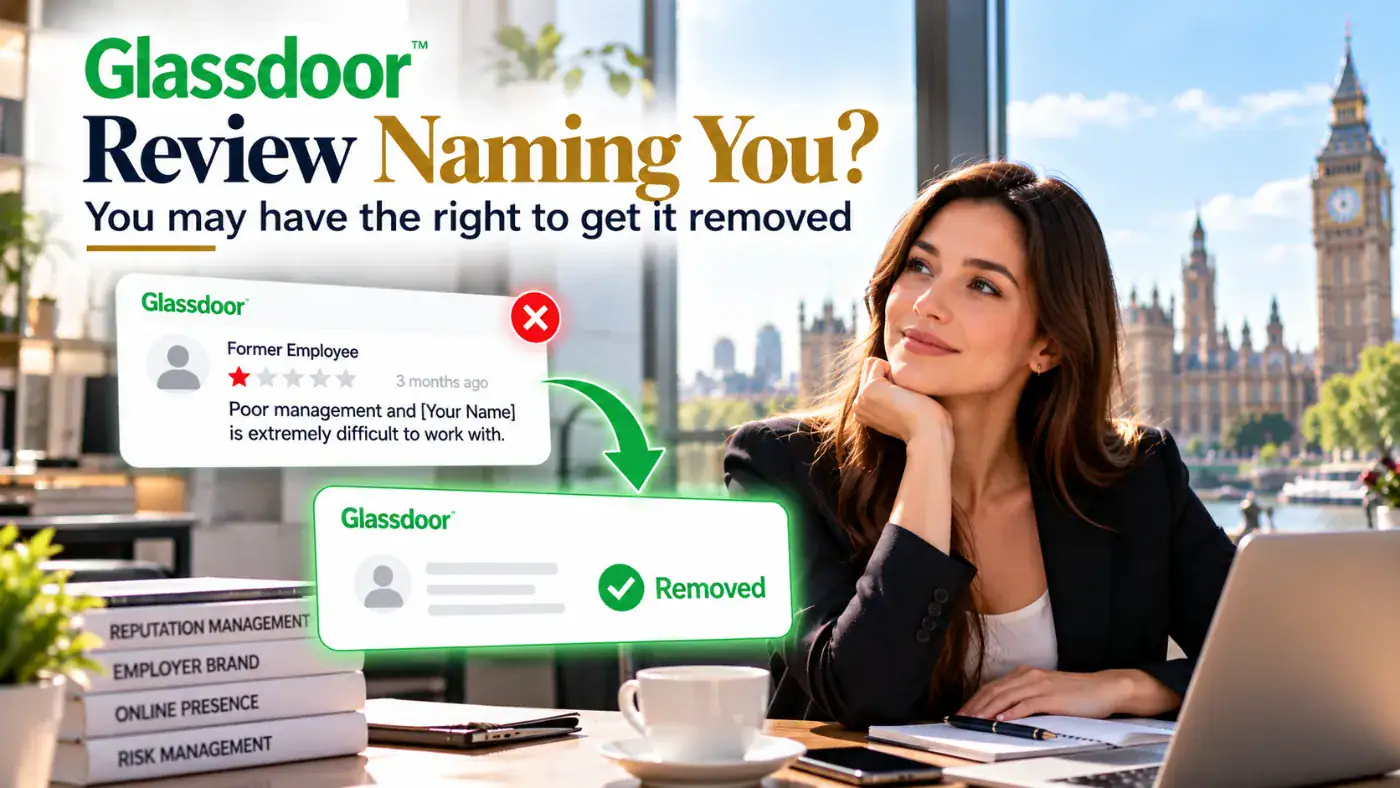
Glassdoor pages can rank in Google, and reviews are sometimes quoted on forums, social media or other review sites. If your name is in the review, it can appear when a future employer or client searches for you, long after you have left that job.
That is where our wider work comes in. As well as the removal request, we can help you build accurate, positive results for your name: a professional profile, an interview or expert article in a respected publication, and updated profiles that rank above the review.
Our personal reputation management service is designed for exactly this. If the problem is affecting the whole company’s Glassdoor rating rather than one person, see our main Glassdoor review removal service.
Every case is different, but most fall into a few familiar patterns. Here is how we would usually think about each one.
This is the most common case. If you are not part of the executive leadership and the comments about you are negative, the review is likely to break Glassdoor’s rule on naming non-executives. We would prepare a short, evidence-based report with your employer and, if the review appears on Google for your name, plan positive coverage alongside it.
The review talks about “the new operations manager” and everyone knows it is you. The key is showing that the description can only refer to one person. An organisation chart, a job advert or a team page usually does this, and we explain it to the moderators clearly and briefly.
Founders and owners can be named when a review describes their behaviour at work. But insults, threats, claims about your private life or personal details are not allowed. We separate fair criticism from breaches and report only what breaks the rules, which keeps the report credible.
Repeated reviews with the same wording, timing or grievance can be a sign of one person posting many times. We document the pattern, report each review on its own merits, and help the company respond in a way that does not escalate things.
Being named in a review feels deeply personal, whatever your role. These are the people who most often ask us for help, and what usually matters most to them.
A former team member names you after a difficult performance conversation. You want it removed before your next promotion review.
You delivered bad news fairly, and now your name sits next to words like “toxic”. You need the company to support a removal request.
A candidate who was not hired names you in an interview review. Your professional reputation depends on trust.
Someone describes you so clearly that everyone knows who they mean, even without your name.
You can be named, but not insulted, threatened or targeted with private details. We help you separate fair criticism from breaches.
You left the company years ago, but a review naming you still ranks when recruiters search your name.
A review that names a team member is not only a reputation issue for the company. It can affect the wellbeing of the person named, their confidence and even their safety. Handling it well shows your whole team that you have their back.
Talk to them privately, acknowledge how upsetting it is, and agree how they would like it handled. Do not discuss the review in team meetings.
Use your employer account to flag the review against the guideline it breaks. Reviews that identify non-executives negatively are the clearest cases.
Trying to unmask a reviewer can damage trust, create legal risk and become a story in itself. Focus on the content, not the person.
If you respond publicly, never repeat the person’s name. Speak about the company’s values and how concerns can be raised.
If several reviews mention the same issue, there may be something to fix internally. Addressing it is the best long-term reputation strategy.
Glassdoor’s guidelines cover incentivised or coerced content. Asking staff to post positive reviews to bury a negative one can backfire badly.
Example employer response
“Thank you for taking the time to share your experience. We take all feedback seriously and would welcome the chance to discuss your concerns directly. Please contact our people team, who can talk in confidence. We are committed to a respectful workplace for everyone.”
One of the hardest parts of being named is walking back into work knowing people may have read it. You do not owe anyone an explanation, but having a calm line ready can take the pressure off.
Keep it short and neutral. Avoid discussing the reviewer, guessing who wrote it or arguing with the content. The less it becomes a topic of conversation, the faster it fades.
Set the tone. Make it clear that speculating about who wrote a review, or sharing it around, is not acceptable. Thank people who raise concerns through the right channels. Your calm response protects the person named and shows the whole team how issues are handled.
You cannot control what people write. But you can make it less likely that frustration turns into a public review that targets one of your team.
Being named publicly can be genuinely upsetting. If you manage someone who has been named, check in with them regularly, make sure they know the company supports them, and point them to any wellbeing support you offer.
If you are the person named, try not to carry it alone. Talk to someone you trust, whether that is your manager, HR, a friend or a professional. The review says far less about you than it feels like right now.
For wider employer reputation support, see our online reputation management service, or our crisis PR agency team if the situation is escalating.
It is completely natural to want to fight back. But some reactions make removal less likely or create a new problem altogether.
When you are named in a review, it is natural to want to know who wrote it. Here is what is useful to understand before deciding what to do.
Glassdoor says it believes in anonymity and free speech, and reviews are displayed without the author’s name. Its guidelines also ask reviewers not to reveal their own identity or contact details in reviews.
Not from Glassdoor directly. In the UK, a court can sometimes order a platform to disclose who posted content, but this is a legal process with costs and no guarantee of success. It is usually only worth considering in serious cases involving false and damaging statements.
Employers should be very careful. Trying to identify or discipline a suspected reviewer can create legal and reputational risk. Getting advice first is always wise.
It disappears from Glassdoor, but screenshots, copies or search snippets may remain for a while. We check where else the content appears and deal with those too.
Similar issues arise on Indeed, Google reviews, forums and India’s AmbitionBox. See our services to remove Google reviews and remove AmbitionBox reviews.
People named on Glassdoor are sometimes named on other platforms as well. Each site has its own rules, so the route to removal is different.
Google removes reviews that break its content policies, such as harassment or personal information. See our Google review removal service.
Popular with Indian employers and candidates, with its own moderation rules. See how we remove AmbitionBox reviews.
Posts naming people may break site rules on harassment or privacy, and can be reported to each platform.
If the issue is your company’s overall rating rather than one person, start with our Glassdoor review removal service. In London? See Glassdoor review removal London.
The rules are the same everywhere, but the risks are not. Some industries have extra reasons to act quickly when a person is named.
Patients and families may search clinicians and care managers by name. A review naming a nurse or care manager can affect trust far beyond the workplace.
Clients choose advisers on reputation. A review naming an individual adviser or partner needs careful, fast handling.
Store and venue managers are often named after difficult shifts or disciplinary decisions. These are usually clear guideline breaches.
Small teams make people easy to identify, even without names. Founders can be named, but not abused.
Individual consultants are often named in interview reviews. Their personal brand is their business.
Managers in public-facing roles can face reviews that spill into social media. A joined-up plan protects the person and the organisation.
We keep things simple and confidential. You will always know what we are doing and what it costs before we do it.
Most of the work happens in the first week. After that, it is about following up and, where needed, protecting your name more widely.
You send us the review. We assess it against Glassdoor’s guidelines and check what appears when your name is searched.
We tell you honestly how strong the case is, what we recommend, and the fixed price of each step.
We prepare the evidence pack and report wording, and coordinate with your employer if needed.
We track the decision, respond to any questions and advise on next steps if the review stays.
If you choose, we build positive coverage so your name is represented accurately on Google.
Removing a review is only part of the job. Protecting the person behind the name is the rest. That is where our background in PR and media makes the difference.
More than two decades of protecting reputations and working with editors means we know how to handle sensitive situations calmly.
Every request is built on the platform’s own published guidelines, which is what moderators respond to.
If a review is unlikely to be removed, we tell you, and explain what else can help.
Your situation is handled discreetly. We never contact anyone about your case without your agreement.
We can place interviews and profiles in named publications, with DA and DR shown before you order.
No retainer. Each step is priced before we start, and the first check is free.
We start with a free, confidential check. You then choose only the steps you need, each at a fixed price agreed before we begin. No monthly retainer.
We read the review against Glassdoor’s guidelines and tell you honestly whether it is likely to be removed, and why.
We prepare the evidence and the wording, guide your employer through the flag, and follow up until there is a decision.
Interviews, profiles and expert articles in named publications so your name is represented accurately on Google.
Glassdoor makes every removal decision. We never promise a removal we cannot justify under its guidelines, and we tell you if a review is unlikely to come down.
Strong, independent coverage is the most reliable way to make sure a review is not the first thing people find. These are examples from our UK and international inventory, with Domain Authority (DA) and Domain Rating (DR).
DA (Moz) and DR (Ahrefs) are third-party estimates and change over time. Labels and link types are set by each publication and confirmed before you order. For leaders, our executive PR services build a lasting profile.
Only in limited cases. Glassdoor allows reviews to name people at the top of a company, such as the CEO, founder, owner or C-suite, if the review describes their behaviour or performance at work. It does not allow negative comments about identifiable individuals outside that group.
Often, yes, if the person named is not part of the executive leadership and the comments are negative. Reviews that include contact details, insults, harassment or threats can also be removed. Glassdoor makes the decision after a review is flagged.
Take screenshots, identify the specific guideline the review breaks, then flag it on Glassdoor with a short, factual explanation. If you are an employee, ask your employer to flag it through its employer account. We can prepare the evidence and wording for you.
Glassdoor’s rule covers identifiable individuals, not only named ones. Initials, a unique job title or a description that can only mean you may be enough. Explain clearly why the description identifies you.
Reviews are displayed without the author’s name, and Glassdoor’s guidelines ask reviewers not to include their own identity or contact details.
Not through Glassdoor directly. In the UK, a court can sometimes order a platform to disclose who posted content, but it is a legal process with costs and is usually reserved for serious, false and damaging statements.
It may be if it contains false statements of fact that cause, or are likely to cause, serious harm to your reputation, which is the test in the Defamation Act 2013. Honest opinion is treated differently. Speak to a solicitor for legal advice.
Yes. Companies with a Glassdoor employer account can flag reviews directly on the site. A joint approach between you and your employer is usually the most effective.
It varies. Some reports are decided quickly, others take longer, particularly if a human moderator needs to review them. We follow up on your behalf.
You can submit a clearer report with new evidence, ask your employer to post a calm response, take legal advice in serious cases, and build positive results so the review is not what people find when they search your name.
Our review check is free. Removal requests are a fixed price agreed before we start, and positive coverage is a fixed price per publication, with a 100% refund if an agreed article is not published.
Yes. Glassdoor’s guidelines apply worldwide, and we help people and employers from every country, with the UK as our home market.
Maybe you had to make a hard call. Maybe someone was simply angry. Either way, your name is now sitting in a public review that colleagues, recruiters and future employers can read, and you never had a chance to reply.
That feeling of being exposed is real. But you are not powerless. Glassdoor’s own rules are often on your side, and where they are not, there are still ways to make sure one review does not define you.
Imagine opening Glassdoor next month and seeing that review gone.
Send us the review on the short form below. We will check it against Glassdoor’s guidelines, in confidence, and tell you honestly what can be done. The check is free.
United Press · Brook’s Mews, Bond Street, London W1K 4HA · 07447 882377 · In PR since 2001 · Clients in the UK and every country