

Forbes Media Coverage — Editorial PR That Earns the Feature.
Genuine Forbes coverage, built the way Forbes editors and contributors actually work. We craft named editorial features with real reporting and lasting credibility — never paid placements, never sponsored content, never syndication tricks.
Trusted by founders and executives across technology, finance and business since 2001.
Our Commitment
Real Forbes coverage — or you don’t pay.
United Press has placed founders and executives in Forbes and 50+ other high-authority outlets since 2001. Every feature is reported and written to the editorial standard Forbes readers expect — earned on merit, never bought. If we don’t deliver the coverage we agree on, you don’t pay for it.
- Named, permanent editorial features with live URLs — ready for your profile, deck and search results.
- Written to genuine editorial standards, not advertorial — coverage that holds up to scrutiny.
- Also placing clients across Entrepreneur UK, The Guardian, Bloomberg and other tier-one media.
- No contracts, no lock-in, and a clear timeline confirmed before we start.
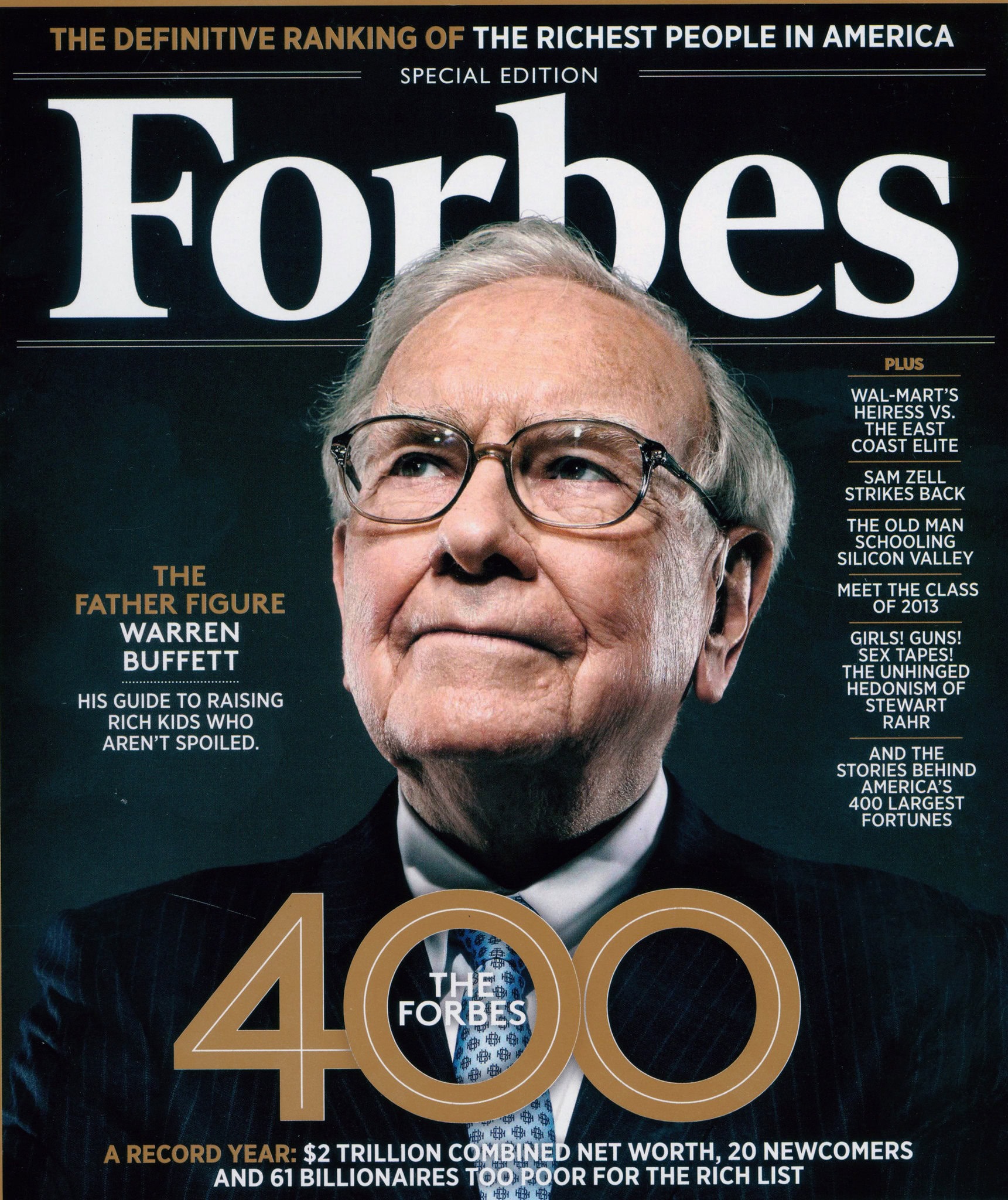
How do you get featured in Forbes?
There are four ways a name can appear on Forbes.com, and they are not equal. You can be reported on by a Forbes staff journalist; be quoted, profiled or listed by a Forbes contributor; publish your own bylined articles through a paid Forbes Councils membership; or run clearly labelled brand content through Forbes BrandVoice. Only the first two are editorial — and editorial is what readers, investors, journalists and AI search engines treat as independent proof. Editorial coverage is never sold; it is commissioned, because someone inside Forbes judged the story worth reporting. That judgement turns on evidence: original data, a genuine first, a named client result, or an informed position on something Forbes already covers. The work of earning it — finding the angle, building the proof, reaching the right desk — is exactly what we do.
- Highest authority: staff editorial — a salaried Forbes reporter covering your company, your funding, your data or your category.
- Most realistic route for most founders: the contributor network — contributors writing industry features need expert voices, case studies and named examples.
- Paid, self-published, labelled as membership content: Forbes Councils.
- Advertising: Forbes BrandVoice — real reach, clearly marked as paid, and not editorial.
Coverage That Builds Real Authority
Three Reasons Founders Choose United Press.
Where generic agencies sell generic press mentions, we build real editorial coverage — mapped to the story angles Forbes editors and contributors actually commission.
Angle-Mapped Coverage
We map your specific story — your funding round, product launch, research, market traction or leadership moment — to the beats Forbes and its contributors actually cover, then build coverage that speaks to those standards.

Tier-1 Outlets Only
Forbes, The Guardian, Bloomberg, Entrepreneur and 50+ other high-domain-authority outlets. No content farms, no paid placements, no gifting-only round-ups.
2–6 Weeks to Placement
Most agencies leave you waiting indefinitely. We deliver your first confirmed placement within 2–6 weeks — with permanent live URLs ready for your media profile.
Editorial coverage mapped to your industry.
Forbes spans every corner of business. We build coverage around the angle that fits your sector — and the milestones editors actually care about.
Technology & Startups
Founders, engineers and AI/ML builders raising, launching or scaling — positioned around traction, product and vision.
Finance & Fintech
Investors, fintech founders and financial leaders — framed around market insight, results and thought leadership.
E-commerce & Consumer Brands
DTC founders and brand builders — coverage that turns growth stories and launches into lasting credibility.
Real Estate & Investment
Developers, fund managers and property entrepreneurs — positioned around deals, strategy and market authority.
Health, Science & Biotech
Researchers, clinicians and biotech founders — coverage that explains complex work in clear, credible language.
Leadership & Personal Brand
Executives and founders building a public profile — thought-leadership features that establish you as a voice in your field.
Editorial PR, end to end —
from angle to published feature.
01Editorial Feature Placement
Named features in Forbes and 50+ tier-one outlets — reported, written and published to genuine editorial standards, with permanent live URLs.
02Story & Angle Development
We find the angle an editor will actually commission — the newsworthy hook inside your work — and shape it into a story that earns coverage on merit.
03Thought Leadership & Bylines
Expert commentary and bylined articles that position you as a credible voice in your field — the kind of authority that compounds over time.
04Profile & Reputation Building
A coherent, credible public record — coverage that reinforces your brand across search, investor decks and your own channels.
From first call to published Forbes feature.
A clear, four-step process — no jargon, no guesswork, and a confirmed timeline before we begin.
Tell us your goals
A short call to understand your story, your milestones and where you want to be featured. Sixty seconds of jargon-free questions.
We build your strategy
We map the right publications and the angle most likely to be commissioned — tailored to your sector and your goals.
We secure the feature
We write to editorial standard and place your story — most first placements land within 2–6 weeks.
You get featured
Live, permanent coverage — tracked, reported and ready for your profile, deck and search results.
The four routes into Forbes —
and what each one is actually worth.
Most guides treat “getting into Forbes” as a single thing. Inside the masthead it is four separate systems, with four different gatekeepers, four different standards of proof, and four very different effects on how you are perceived afterwards. Knowing which one a proposal is really offering you is the single most useful thing you can learn before spending money on Forbes coverage.
01 — Forbes staff reporting
Forbes employs salaried reporters and editors who cover defined beats: venture capital, fintech, enterprise technology, consumer brands, wealth, energy, healthcare and the annual lists. They answer to Forbes editors, not to sources. Nothing in the piece can be bought, previewed or approved, and that is precisely why it carries weight.
What it takes: a story that stands up without you in it. A round with a notable lead investor, proprietary data nobody else holds, a category shift you can evidence, a regulation you are first to answer, or a result a named customer will confirm on the record.
02 — The Forbes contributor network
Alongside staff, Forbes runs a managed network of external contributors writing on their own beats under Forbes editorial oversight. In late 2025 Forbes tightened it considerably: dozens of writers were moved to “former contributor” status, and those who remained were asked to publish at least two substantial articles a month, while more than 200 new contributors were brought on.
What that means for you: a smaller, busier, more actively managed network of writers who each need a steady supply of credible experts, data points and real examples. A well-evidenced, well-timed pitch is genuinely welcome here — which is why this is the most realistic editorial route for most founders and executives.
03 — Forbes Councils
Forbes Councils are nine paid, vetted membership communities — Agency, Business, Business Development, Coaches, Communications, Finance, Human Resources, Nonprofit and Technology. Applicants are screened against seniority criteria: senior executives, C-suite leaders, owners, founders and partners, with businesses typically in the $1m–$3m revenue range, though the bar varies by council.
What you get: the right to publish your own bylined articles on Forbes.com, contribute to Expert Panel round-ups, and hold a Forbes Executive Profile. It is real, it sits on the Forbes domain, and it is useful. What it is not is independent coverage — you are the author, and the page says so.
04 — Forbes BrandVoice
BrandVoice is Forbes’ native advertising programme. A brand buys a publishing slot, produces the content, and Forbes carries it with a clear partner label and the brand’s name in place of a journalist’s byline. Budgets are set commercially and are normally out of reach for anyone below mid-market.
Use it for: reach and distribution behind a campaign you already have. Do not use it as a credibility signal — readers, journalists and, increasingly, AI answer engines distinguish sponsored labels from editorial ones.
Why most Forbes pitches are rejected
Forbes desks receive far more approaches than they can answer, and the reasons for rejection are remarkably consistent. Almost all of them are fixable before you ever send an email.
- The company is the story. A launch, a rebrand, a milestone or a new hire is news to you and to nobody else. Forbes covers what those things mean for a market.
- No evidence. “Leading”, “fastest-growing” and “revolutionary” are not claims a reporter can print. Numbers, sources and named customers are.
- Wrong desk. A fintech pitch sent to a consumer-brands reporter is not a near miss; it is a deletion.
- No timing. The strongest angles attach to something already moving — a regulation, a market shift, a data release, a moment in the news cycle.
- Nothing to say beyond yourself. Contributors need a quotable point of view on the industry, not a description of your product.
- Exclusivity confusion. Offering the same “exclusive” to five outlets is noticed, and it costs you the relationship permanently.
Getting into Forbes from the United Kingdom.
Forbes is an American title with a global newsroom, and there is no separate UK edition of the magazine. That surprises British founders, and it changes the approach: you are not pitching a London desk, you are giving an international publication a reason to care about a British story.
In practice that means framing your work in terms a US-headquartered editor recognises — market size, transatlantic relevance, a European angle on something already being covered in the States, or a UK regulatory development that foreshadows one elsewhere. British understatement is the enemy here. Evidence is not boasting.
Three Forbes surfaces matter most to UK clients, and we pitch each of them differently.
Forbes.com editorial
The main site, where staff reporters and contributors cover European companies routinely — usually because the story connects to a wider market movement rather than to Britain alone.
Forbes Advisor UK
A separate, UK-based editorial operation publishing consumer finance, business and money journalism for a British audience, with its own editors and its own standards. For fintech, insurance, property, investment and small-business brands it is often a stronger and more attainable fit than the main site.
Forbes Under 30 Europe
The European list runs ten categories and around 300 honourees a year, with nominations open to the public — you may nominate yourself or someone else — and judging by Forbes editors alongside independent and industry judges. Entries are assessed on innovation, impact and leadership, and the age limit is strict. It rewards a year of preparation, not a last-minute form.
Why founders switch to United Press.
What you get with us that most agencies can’t — or won’t — promise.
| Traditional Agencies | United Press | |
|---|---|---|
| Guaranteed editorial placement | ✕ | ✓ |
| Named, permanent live URLs | ✕ | ✓ |
| Genuine editorial standards — no advertorial | ✕ | ✓ |
| First placement in 2–6 weeks | ✕ | ✓ |
| No contracts or lock-in | ✕ | ✓ |
Coverage that AI engines cite, too.
When ChatGPT, Gemini, Perplexity and Google’s AI answers describe who you are, they draw on credible, published sources. Genuine Forbes coverage is exactly the kind of authoritative citation these systems trust.
Every feature we place is a permanent, high-authority reference — building your visibility not just in search results, but in the AI answers your customers, investors and partners increasingly rely on.
You already have the achievements. Editorial recognition makes them easier to understand.
Awards, patents, research, recommendation letters and speaking are strong evidence — but they sit in separate documents a reader has to piece together. Independent editorial coverage explains your work in one credible, public place, in plain language. It does not replace your evidence. It helps others understand it faster.
Without editorial recognition
- CV
- Awards
- Publications
- Patents
- Recommendation letters
With editorial recognition
- CV
- Awards
- Publications
- Patents
- Recommendation letters
- Independent editorial features
- A strong public professional profile
- Thought leadership
- Public industry recognition
Before
- Published research papers
- Competitive research grants
- A granted patent
- Conference speaking
After — everything above, plus an independent editorial feature explaining
- Why the work matters, in plain language
- The innovation behind it
- Its contribution to the field
- The leadership and impact it demonstrates
Typical portfolio
Portfolio with editorial recognition
Questions we are asked about Forbes.
Can you pay to be featured in Forbes?
Not for editorial. Forbes sells two publishing products — BrandVoice, its native advertising programme, and Forbes Councils, a paid membership that lets vetted executives publish their own bylined articles. Both are clearly labelled on the page. Coverage written by a Forbes staff reporter or contributor cannot be bought at any price. What you can invest in is the work that earns it: the angle, the evidence, the materials and the right approach to the right desk.
What is the difference between a Forbes staff writer and a Forbes contributor?
Staff writers are salaried Forbes journalists with assigned beats and editors above them. Contributors are external specialists writing under Forbes editorial oversight, usually on a narrower subject. Both produce editorial articles on Forbes.com with a journalist’s byline, both are indexed the same way by search engines, and both are cited by AI answer engines. Staff coverage carries more institutional weight; contributor coverage is more attainable and, for most founders, the sensible first target.
Is Forbes Councils the same as being featured in Forbes?
No, and the distinction matters. A Forbes Councils article is published on Forbes.com under your own name, because you are a fee-paying member of one of the nine councils — Agency, Business, Business Development, Coaches, Communications, Finance, Human Resources, Nonprofit or Technology. It is a legitimate platform with real reach and a genuine screening process. But you are the author, not the subject, and the page identifies it as council content. Being featured means an independent journalist chose to write about you.
How long does it realistically take to get into Forbes?
For a prepared client with a genuine angle, a contributor placement typically moves in weeks rather than months, because contributors publish on a regular cadence and are actively looking for credible sources. Staff editorial runs on the newsroom’s timetable and is tied to something happening — a round, a result, a data release, a policy change — so it can take a single week or several months. Anyone offering a guaranteed date for staff editorial is describing a paid product, not journalism.
What kind of story does Forbes actually commission?
Stories about a market, told through a company. Original data you can share, a measurable first, a named customer outcome, a founder’s decision that runs against the consensus, or an informed read on something Forbes is already covering. The test an editor applies is simple: would this still be interesting to a reader who has never heard of the company? If the answer is no, the pitch needs work — not a bigger send list.
Does Forbes cover UK companies?
Regularly, but as part of an international story rather than a British one. Forbes has no separate UK edition of the magazine; UK founders reach it through Forbes.com’s global desks, through Forbes Advisor UK — a distinct, UK-based editorial team covering money, business and consumer finance for British readers — and through Forbes Under 30 Europe. Each has a different editor, a different standard and a different pitch.
How do I get on the Forbes Under 30 Europe list?
Nominations are open to the public and you may nominate yourself or someone else. The European list runs ten categories and roughly 300 honourees a year, judged by Forbes editors alongside independent and industry judges on innovation, impact and leadership, with a firm age limit. The candidates who make it almost always arrive with a year of documented traction and existing press behind them, which is why we treat list nominations as the output of a coverage strategy rather than the start of one.
Will Forbes coverage help me appear in ChatGPT and Google AI answers?
It is one of the strongest single signals available. Large language models and AI search systems weight established, independently edited publications heavily when deciding who to describe and how. A genuine Forbes article gives those systems a durable, high-authority reference tied to your name — which is why editorial coverage now affects not only what people find when they search you, but what an AI tells them about you.
How do I know a Forbes offer is genuine?
Check three things. The domain: real coverage lives on forbes.com, not on a lookalike subdomain or a regional imitation. The byline: an editorial piece carries a journalist’s name, a council piece carries yours, a BrandVoice piece carries a brand’s. And the label: Forbes marks paid content plainly. If an offer promises editorial coverage on a fixed date for a fixed fee and will not name the route, it is one of the paid products — or it is not Forbes at all.
Let’s get your story in Forbes, The Guardian, Entrepreneur UK & major global media.
Tell us about your work and we’ll map the right publications and the angle most likely to earn coverage — with a clear timeline, and no obligation.