
Looking for the best PR for UK nutrition brands in 2027? UK nutrition brand PR — for supplement brands, protein and sports nutrition, functional foods, and specialist nutrition. Must comply with Nutrition and Health Claims Regulation (NHCR) — claims must come from approved list only.
UK nutrition publications in 2027
- Health Food Manufacturers.
- Natural Products Online.
- Women’s Health / Men’s Health.
- Health Trade Magazine.
Why PR for UK nutrition brands must be evidence-led
Nutrition is crowded with bold promises, and health editors have become cautious about which brands they feature. Shoppers are more careful too, checking ingredients, reading reviews and looking for expert opinion before they buy. Good PR for UK nutrition brands earns coverage with honest, evidence-led stories, qualified spokespeople and claims that stay within the rules, so your brand is trusted by editors and customers alike.
The audience is wide: athletes and gym-goers, busy parents, older adults, people following specific diets and the retailers and pharmacists who recommend products. Each needs a version of the story that speaks to their goals, and PR for UK nutrition brands works best when those versions are planned together.
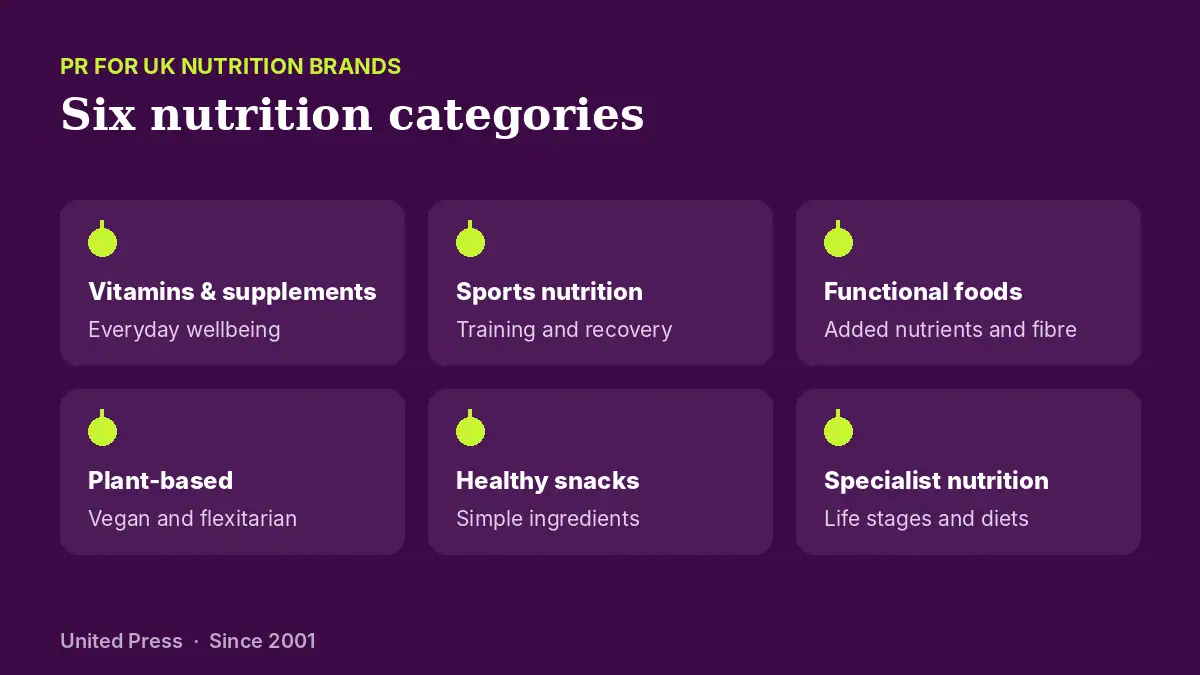
Nutrition brands we work with
- Vitamins and supplements for everyday wellbeing and life stages.
- Sports and protein nutrition for training, recovery and performance.
- Functional foods and drinks with added nutrients or fibre.
- Plant-based nutrition for vegan and flexitarian shoppers.
- Healthy snacks with simple, transparent ingredients.
- Specialist nutrition for particular life stages or dietary needs.
Nutrition stories that earn coverage
Health, fitness, food and trade editors write about nutrition when a story is useful, credible and new. These angles work well in PR for UK nutrition brands:
- Expert-led advice from registered nutritionists or dietitians on your team or advisory board.
- Ingredient stories: where your ingredients come from and why they were chosen.
- Founder journeys that explain the gap in the market the brand set out to fill.
- Athlete and ambassador partnerships, shared with permission and with clear disclosure.
- Sustainability: packaging, sourcing and plant-based alternatives, backed by real figures.
- Retail milestones such as new listings in supermarkets, pharmacies or gyms.

Health claims: staying within the rules
In Great Britain, nutrition and health claims on food and supplements must be authorised, and the government publishes the Great Britain nutrition and health claims register listing the claims that can be used and the conditions attached to each. Press releases, interviews and social posts linked to your brand should follow the same rules as your packaging.
In PR for UK nutrition brands, we check every claim against the register before it reaches a journalist, avoid any suggestion that a product treats or prevents disease, and make sure wording matches the evidence. This care protects your brand, and it makes PR for UK nutrition brands far more welcome with health editors who receive many pitches that go too far.
Working with experts and retailers
Qualified experts make nutrition stories credible. We help you build a small panel of registered nutritionists, dietitians or sports scientists who can comment accurately, and we brief them on your products and the claims you can make. Alongside consumer coverage, trade stories reach buyers at supermarkets, pharmacies and specialist retailers, so PR for UK nutrition brands supports listings as well as awareness. For newer brands, PR for UK nutrition brands with a credible expert voice is often what persuades a buyer to take a first meeting.

Building a brand people return to
Nutrition is a repeat purchase, so loyalty matters as much as the first sale. Ongoing coverage, from seasonal recipes to expert tips and customer stories shared with permission, keeps your brand in front of people between purchases. Steady PR for UK nutrition brands builds the familiarity that turns a first order into a regular habit, and it gives retailers confidence that demand will last. Over a year, PR for UK nutrition brands planned around the seasons can keep a brand visible every month.
A 90-day PR plan for nutrition brands
- Weeks 1 to 2: agree audiences, key messages and expert spokespeople, and check every claim against the GB register.
- Weeks 3 to 6: secure a first health or fitness feature built around expert advice or an ingredient story.
- Weeks 7 to 10: add trade coverage, a founder interview and seasonal content such as January or summer training.
- Weeks 11 to 12: share coverage with retailers, customers and investors, review results and plan the next quarter.

Placements go live by the date agreed in writing, or you receive a 100% refund.
Related reading: our guides to PR for fitness apps, PR for gluten-free brands and PR for meal kits.
PR for UK nutrition brands in Google and AI search
Shoppers now ask ChatGPT, Gemini, Perplexity and Google AI questions like “best protein powder for beginners” or “vegan vitamin D supplements in the UK”. These tools rely heavily on trusted publications when they decide which brands to recommend.
Editorial coverage gives them credible sources that name your brand and explain what makes it different. No one can guarantee an AI mention, but consistent PR for UK nutrition brands gives you a much better chance of appearing in those answers, while high-authority links strengthen your website in Google. Many brands also pair features with press release distribution.
PR for UK nutrition brands: questions
How do nutrition brands get featured in health and fitness media?
Offer expert-led advice from qualified professionals, honest ingredient and founder stories, and seasonal content editors can use. In PR for UK nutrition brands, we check every claim first, pitch the right editors and confirm each live link.
Can nutrition brands make health claims in press releases?
Only claims that are authorised for use in Great Britain, used with the conditions attached to them. Press materials should follow the same rules as packaging, and should never suggest that a product treats or prevents disease.
Can PR help a nutrition brand appear in AI search?
It can improve your chances. AI tools such as ChatGPT and Gemini rely on trusted publications when they recommend brands. No one can guarantee an AI mention, but press coverage is one of the strongest signals a nutrition brand can build.
The claims rules come first
In Great Britain, a nutrition or health claim about a food or supplement must be on the GB Nutrition and Health Claims Register and used as worded there. This applies to press releases, websites and social posts as well as packaging. The ASA’s CAP Code also covers how food and food supplements are advertised. Words like “boosts immunity” or “burns fat” can only be used if an approved claim allows them. We check every message before it goes out.
Advertising limits on less healthy foods
Restrictions on TV and paid online advertising for less healthy (HFSS) food and drink are now in force. Earned media is not paid advertising, but brands in these categories should still plan their messages with care.
Where nutrition brands get coverage
- Health and fitness consumer titles — Women’s Health, Men’s Health, Runner’s World and wellness writers. They test products and want evidence.
- The Grocer and Health Food Business — retail listings, launches and the trade.
- Sports and fitness media — athletes, coaches and event partnerships.
- National health and food writers — for research, dietitian comment and trends.
Events and timing
Natural & Organic Products Europe in London each spring is a key trade moment. January is the biggest month for health stories, so pitch December. Summer brings sports and outdoor angles.
Angles that work
- A registered dietitian or nutritionist as your spokesperson.
- Independent research, explained honestly — what it shows and what it does not.
- Founder stories about why the product exists.
- Retail wins, such as a new supermarket listing.
Questions we are often asked
Can we say our product supports immunity?
Only if an approved claim on the GB register applies, for example linked to specific vitamins at the right levels, and you use it correctly.
Do journalists accept product samples?
Yes, especially health and fitness writers. Include the ingredient list and any approved claims.
When is the best time to launch?
January is strong for health, but also crowded. Spring and autumn launches can stand out more.