
Best Wikipedia Page Creation Service in the UK (2026) Your story belongs on the record. Let’s earn it the right way.
United Press helps companies, founders, authors, artists and experts in the UK and worldwide reach Wikipedia honestly. We check whether you meet Wikipedia’s notability rules, build the independent press coverage you may be missing, write a neutral, fully referenced draft and submit it through Wikipedia’s own review process with the disclosure Wikipedia requires. Every project is booked in advance, and you receive a 100% refund if your article is not accepted and live.
You search your own name, or your company’s. Your competitor has a Wikipedia article. You have a LinkedIn page and a website.
It stings more than people admit. You have built something real: a company that employs people, a body of research, a catalogue of music, a book that sold, a career that changed an industry. Yet when a journalist, investor, partner or AI assistant goes looking for a neutral summary of who you are, there is nothing there.
So you start looking for help, and the internet is full of promises. “Guaranteed approval.” “Certified Wikipedia writers.” “Your page live in days.” Some people take those promises, see an article appear, and then watch it disappear weeks later with a deletion notice. Others find their company’s name tied to an undisclosed editing scandal. A few lose their chance at a page for years because the first attempt was so promotional that editors remember it.
We understand why you want this. A Wikipedia article is one of the most trusted descriptions anyone can have online. It sits at the top of search results, shapes Google’s knowledge panels and is one of the sources AI tools rely on to describe people and organisations.
That is exactly why it has to be done properly. United Press has worked in PR since 2001 from Brook’s Mews, off Bond Street in London. We are a press-first agency, which matters, because Wikipedia notability is built on press coverage. This page explains how Wikipedia decides who qualifies, what counts and what does not, how we work within Wikipedia’s rules, and why every project carries a 100% refund if your article is not accepted.
Read it once. Then ask for a free notability check. If you are not ready yet, we will tell you honestly, and show you how to get there.
Two ways people try to get on Wikipedia
| “Guaranteed” shortcut | Notability-first | |
|---|---|---|
| Starts with | A promise of approval | An honest notability check |
| Sources | Press releases, sponsored posts | Independent, reliable coverage |
| Disclosure | Often hidden | Declared, as Wikipedia requires |
| Route | Published directly | Articles for Creation review |
| Typical outcome | Tagged, then deleted | An article that can last |
Can you hire someone to create a Wikipedia page in the UK?
Yes, but only within Wikipedia’s rules. Anyone writing about a client must disclose that relationship under the Wikimedia Terms of Use, and should submit new articles through Wikipedia’s Articles for Creation review rather than publishing directly. Most importantly, the subject must be notable: Wikipedia requires significant coverage in reliable sources that are independent of the person or company. No writer can create notability that does not exist, and no agency can honestly promise approval, because volunteer editors make the final decision.
United Press starts with a free notability check. If you qualify, we write a neutral, referenced draft and submit it with full disclosure. If you do not yet qualify, we help you earn independent coverage in titles Wikipedia editors generally trust, such as Reuters, The Times, The Independent and USA Today. Either way, you receive a 100% refund if your article is not accepted and live.
What qualifies you for a Wikipedia page: the notability test
Wikipedia does not ask whether you are successful, important or popular. It asks one question: have reliable, independent sources already written about you in depth? Wikipedia’s general notability guideline breaks that into three tests, and every source must pass all three.
Significant coverage
The source must discuss you or your company directly and in detail, not just mention you in passing or list you among others.
Counts: a feature profile about your company. Does not: one quote in an article about your industry.
Reliable sources
The publication must have a reputation for fact-checking and editorial oversight. Wikipedia keeps a public list of how its editors rate common sources.
Counts: Reuters, The Times, USA Today. Does not: blogs, forums or deprecated tabloids.
Independent of you
The coverage must be written by people with no connection to you, and not arranged, sponsored or supplied by you.
Counts: a journalist’s own reporting. Does not: your press release, an advertorial or your own website.
Sources that usually help
- In-depth features and profiles in national and regional newspapers
- Independent reviews of your books, films, music or products in respected titles
- Substantial coverage in established trade and industry publications
- Academic citations and reviews of your research, for scholars
- Major awards reported independently by reliable media
- Books or long-form journalism that discuss you in depth
Sources that usually do not count
- Press releases, including syndicated wire releases
- Sponsored, partner or advertorial content, even in a famous title
- Interviews where you mainly talk about yourself
- Routine announcements such as funding rounds or hires reported in brief
- Directory listings, company databases and your own website
- Social media, podcasts you host and self-published books or blogs
Companies face a stricter test than most subjects. Wikipedia’s guideline for organisations and companies looks closely at whether coverage is independent and in depth, and is sceptical of anything that reads like promotion. People are assessed under the biography guidelines, with extra care for living people.
Who wants a Wikipedia page, and what they really need
Behind every request is a deeper goal: trust, legacy, visibility, or simply a fair summary of years of work. Here is what we hear from each type of client, and the notability path that usually applies.
| Who they are | Why they want a page | The notability path | Where to start |
|---|---|---|---|
| Established companies | Credibility with partners, investors and the press | Organisation guideline: in-depth, independent coverage of the company itself | Earned features in business titles such as Reuters |
| Founders and CEOs | A neutral biography for investors and media | Biography guideline: coverage about the person, not only their company | Profile coverage, see thought leadership PR |
| Authors | Recognition for their books and ideas | Creative professionals: independent reviews and coverage of their work | Book reviews in national and specialist titles |
| Musicians and artists | A trusted record of their career | Music and creative guidelines: charting, major reviews, notable awards | Independent reviews and features |
| Academics and scientists | Visibility for research and expertise | Academic guideline: significant impact in their field | Media coverage of their research |
| Public figures and celebrities | Accuracy about their life and work | Biography guideline, with strict rules for living people | See our celebrity PR page |
| Visa and talent applicants | Evidence of recognition, alongside press coverage | Same biography rules; a page is never automatic | Press coverage first, see Global Talent and O-1 |
| Heritage farms and rural businesses | A lasting record of history and contribution | Organisation guideline, often supported by regional and historical sources | Regional coverage, see our agriculture PR page |
Whoever you are, the starting point is the same: what have independent journalists, critics and researchers already written about you? That question shapes every recommendation we make, and it is why our first conversation is always a free notability check rather than a sales pitch.
The Wikipedia notability checker: are you ready for a page?
Tick everything that is true today. The checker gives an honest first view of your chances and the best next step. It is a guide, not a decision, and nothing you tick is sent anywhere.
Your coverage today
Your result will appear here, with the step we would recommend next.
Get My Free Notability Check →Top publications for Wikipedia notability, with DA, DR and editor ratings
Wikipedia editors keep a public list of how they rate commonly used sources. Below, we show that rating alongside each title’s Domain Authority (DA, Moz) and Domain Rating (DR, Ahrefs). One rule matters above all: even in the most respected title, only independent editorial coverage counts. Sponsored, partner or arranged articles do not establish notability.
How should you read this table? Domain Authority and Domain Rating tell you how strong a website is in search, which matters for visibility and for how often AI tools encounter it. Wikipedia’s editor rating tells you something different: whether volunteers trust that publication’s reporting as evidence. A title can have a very high DA and still be rated unreliable by Wikipedia editors, as International Business Times and Benzinga show. For a Wikipedia article, the editor rating and the independence of the coverage always matter more than the authority score.
That is why our approach starts with journalism. Earned coverage in titles rated generally reliable gives you the strongest foundation. Coverage in no-consensus titles can add useful detail. Arranged placements, press releases and syndicated announcements can still help your wider visibility, but we never present them to Wikipedia editors as proof of notability.
| Publication | DA | DR | Wikipedia editor rating | What it means for your article |
|---|---|---|---|---|
| Generally reliable | ||||
| Reuters | 94 | 93 | Generally reliable | Independent Reuters reporting is among the strongest sources available |
| The Independent | 94 | 91 | Generally reliable | National UK coverage editors accept, when it is editorial |
| USA Today | 94 | 92 | Generally reliable | Strong for international subjects and US recognition |
| The Times | 92 | 91 | Generally reliable | A cornerstone UK source for companies and people |
| No consensus: judged case by case | ||||
| Business Insider | 94 | 92 | No consensus | Useful supporting coverage; culture reporting is rated more highly |
| Evening Standard | 93 | 89 | No consensus | Helpful for London subjects alongside stronger sources |
| TechCrunch | 93 | 92 | No consensus | Technology coverage editors weigh carefully, especially funding news |
| Entrepreneur | 92 | 91 | No consensus | Staff-written features help more than contributor articles |
| The Next Web | 91 | 89 | No consensus | Supporting source for European tech subjects |
| Regional and specialist: assessed on their merits | ||||
| Herald Scotland | 87 | 82 | Established regional | Valuable for Scottish companies, people and rural businesses |
| Eastern Daily Press | 78 | 77 | Established regional | Strong regional source for East Anglia, including farming |
| Farm Online (Australia) | 57 | 68 | Specialist trade | Specialist agricultural coverage for agritech and farming subjects |
| Generally unreliable or deprecated: avoid as notability evidence | ||||
| International Business Times | 90 | 82 | Generally unreliable | Good for visibility, but editors do not accept it for notability |
| Benzinga | 88 | 86 | Generally unreliable | Fine for investor visibility, not for Wikipedia |
| PR Newswire / Yahoo Finance releases | 93 | 92 | Generally unreliable | Press releases are never independent coverage |
| The Sun (UK) | 94 | 89 | Deprecated | Wikipedia editors discourage citing it at all |
Editor ratings come from Wikipedia’s public list of perennial sources, checked in October 2026, and can change. DA and DR come from our current publisher list. Other sources Wikipedia rates as generally reliable include the BBC, The Guardian, the Financial Times, The Economist, The Daily Telegraph, Wired and Bloomberg; coverage there is earned through journalists, never arranged. See all titles on our publications page.
How United Press creates a Wikipedia page, stage by stage
Every stage is designed to respect Wikipedia’s rules and give your article the best chance of being accepted and lasting. Every project is booked in advance, with a 100% refund if your article is not accepted and live.
- Free, within 24 hours
Notability check
Send us your name or company and any coverage you have. We review it against Wikipedia’s notability guidelines and tell you honestly whether you qualify now, are borderline, or need more coverage first.
- Week 1
Source audit
We gather and test every potential source for significance, reliability and independence, using Wikipedia’s own source ratings. Weak sources are set aside so they do not undermine the strong ones.
- Only if needed
Earned coverage plan
If your sources are not yet strong enough, our media relations team pitches genuine stories to journalists at reliable publications. This takes time and is never guaranteed, but it builds the foundation a lasting article needs.
- 2–3 weeks
Neutral, referenced draft
Our writers produce a factual, encyclopedic draft in Wikipedia’s style, with every claim supported by an independent source. No marketing language, no unsupported praise and nothing copied from your website.
- At submission
Disclosure and submission
We declare our relationship with you on Wikipedia, as the Wikimedia Terms of Use require, and submit the draft through Articles for Creation, where an experienced volunteer editor reviews it.
- Weeks to months
Review and responses
Review times depend on Wikipedia’s backlog. If a reviewer asks for changes or better sources, we respond openly and improve the draft, always within the rules.
- On acceptance
Accepted and live, or a 100% refund
Once your article is accepted and live in Wikipedia’s main space, your project is complete. If it is not accepted, you receive a 100% refund. Afterwards we show you how to request future updates properly through the article’s talk page.
Eight reasons Wikipedia pages get declined or deleted
Wikipedia removes thousands of unsuitable articles. Most failures come from the same few mistakes. Knowing them is the best protection you can have.
Not enough independent coverage
The most common reason. Without significant, reliable, independent sources, no amount of good writing will help.
Written like an advert
Words like “leading”, “innovative” or “world-class” signal promotion. Overtly promotional pages can be deleted quickly.
Built on press releases
Releases, sponsored posts and syndicated announcements are not independent, however famous the site that hosts them.
Hidden commercial editing
Undisclosed editing for clients breaks the Wikimedia Terms of Use. Accounts get blocked and articles linked to them are often removed.
Copied from your website
Pasting text from your own site or brochures is a copyright problem and reads as promotion. Everything must be rewritten neutrally.
Trusting a fake “Wikipedia admin”
Wikipedia has repeatedly warned about people who pose as editors or administrators and charge for approval. Real administrators do not sell articles.
Editing your own page afterwards
Adding praise or removing criticism yourself breaks conflict-of-interest guidance. Changes should be requested on the talk page.
Applying before the coverage exists
A single launch story or funding round is often “too soon”. Waiting until coverage builds gives a far better chance.
What a strong Wikipedia article actually looks like
A Wikipedia article is not a brochure, a press release or a CV. It is a short, neutral summary of what reliable sources have said. These are the parts editors expect to see, and how we approach each one.
The lead section
Two or three sentences that define the subject plainly: who or what it is, where it is based and why sources have written about it. No adjectives like “leading” or “award-winning” unless a source says so directly.
The infobox
Key facts in a standard box: founding date, founders, headquarters, industry or, for people, birth date, occupation and known works. Every detail must be verifiable.
History or career
A chronological account drawn from independent sources: origins, milestones, changes and significant events, written in a calm, factual voice.
Work, products or research
What the subject is known for, described as sources describe it. For companies this means operations; for authors and artists, their works and how critics received them.
Recognition and reception
Awards, reviews and coverage, and where relevant, criticism or controversy reported by reliable sources. Balance is what makes an article credible.
References
The backbone of the article. Each statement links to an independent, reliable source. A short list of strong references beats a long list of weak ones every time.
Notice what is missing: sales language, customer testimonials, mission statements and calls to action. If you want those, your website is the right place. On Wikipedia, restraint is what earns trust.
Six Wikipedia myths that ruin people’s chances
Much of what you read about getting a Wikipedia page is wrong. These are the myths we correct most often in our first conversations.
“Certified Wikipedia writers can guarantee approval.”
Wikipedia does not certify writers, agencies or editors. Approval is decided by independent volunteers, case by case.
“If I am famous on social media, I qualify.”
Followers do not count. Only significant coverage in reliable, independent sources establishes notability.
“Any article in a big publication will do.”
Sponsored, contributor or arranged content does not count, however well known the masthead. Independent editorial coverage does.
“Once it is live, it is mine to edit.”
No one owns a Wikipedia article. The community maintains it, and people connected to the subject should request changes rather than make them.
“More references make a stronger article.”
Editors judge quality, not quantity. Padding an article with weak sources can make it look promotional and hurt its chances.
“A declined draft means never.”
Many subjects become notable later. With the right coverage, a well-prepared resubmission can succeed months or years afterwards.
The rules we follow so your article can last
Wikipedia is run by volunteers who care deeply about neutrality. Working with them, not around them, is the only way to an article that survives. These are the rules that shape every project we take on.
Commercial editing must be disclosed
Anyone who edits Wikipedia on behalf of a client or employer must disclose their employer, client and affiliation. It is a legal requirement of using the site, not a courtesy.
How we work: our relationship with you is declared openly on Wikipedia for every article we draft.
Drafts go through review, not straight live
Editors with a conflict of interest are strongly discouraged from editing articles directly and are asked to submit new articles for independent review.
How we work: we submit through Articles for Creation and request later changes on the talk page.
Balanced, not promotional
Articles must represent what reliable sources say, fairly and without bias, including any notable criticism. Biographies of living people are held to an even higher standard of accuracy.
How we work: we write what the sources support, and explain upfront that a Wikipedia article is not a marketing page.
Honest claims everywhere
Google rewards helpful, trustworthy content and penalises misleading pages. Promises such as “guaranteed approval” or “certified Wikipedia writers” describe things that do not exist.
How we work: no invented credentials, no guaranteed outcomes and no fabricated claims, on Wikipedia or on our own site.
This is a plain-English summary to help you plan, not legal advice. Wikipedia’s policies are written and updated by its community, and its volunteer editors always have the final say.
Why Wikipedia shapes what Google and AI say about you
Wikipedia is one of the most widely used reference sources on the web. Google often draws on it for knowledge panels, the information boxes that appear beside search results for people and organisations. AI assistants such as ChatGPT, Gemini, Perplexity, Claude and Copilot also lean heavily on Wikipedia and on the reliable publications it cites when they summarise who someone is.
That creates a powerful chain. Independent press coverage builds notability. Notability supports a Wikipedia article. The article, and the sources behind it, help search engines and AI tools describe you accurately and consistently.
Even before a Wikipedia article is possible, we optimise every step for generative engine optimisation (GEO) and answer engine optimisation (AEO):
- Earned coverage in sources AI tools and Wikipedia editors both trust
- Consistent names, dates and facts across every article and profile
- A clear, factual About page with structured data on your own site
- Neutral descriptions that AI assistants can quote without distortion
Read our guide to the best publications for AI visibility.
“Guaranteed approval” services vs the notability-first approach
Many Wikipedia services in the UK promise approval in advance. Here is how that compares with the way we work, so you can choose with your eyes open.
| What matters | “Guaranteed” page services | United Press |
|---|---|---|
| First step | Take the order | Free, honest notability check |
| If you are not notable | Often publish anyway | Tell you, and help build real coverage first |
| Sources used | Press releases, sponsored posts, profiles | Independent, reliable coverage only |
| Disclosure on Wikipedia | Frequently missing | Always declared |
| Route onto Wikipedia | Often published directly | Articles for Creation review |
| Writing style | Promotional | Neutral and encyclopedic |
| If the article is declined | Varies by provider | 100% refund if not accepted and live |
| Long-term risk | Deletion and a damaged record with editors | An article built to last |
Not notable enough today? Here is what to do instead
Being told “not yet” is not the end. It is a plan. These are the steps that build the foundations of a future Wikipedia article and improve how you appear online right now.
Earn independent press coverage
Genuine stories pitched to journalists at reliable titles are the raw material of notability. This is our core work as a PR agency.
Build a strong About page
A factual About page with structured data helps Google and AI tools understand who you are while you build coverage.
Claim your knowledge panel
Google lets people and organisations verify and suggest edits to their knowledge panel, which can appear without a Wikipedia article.
Align your profiles
Consistent names, dates and descriptions across LinkedIn, company databases and your website reduce confusion for search and AI.
Win and publicise real awards
Recognised industry awards, reported by independent media, strengthen both your reputation and your future notability.
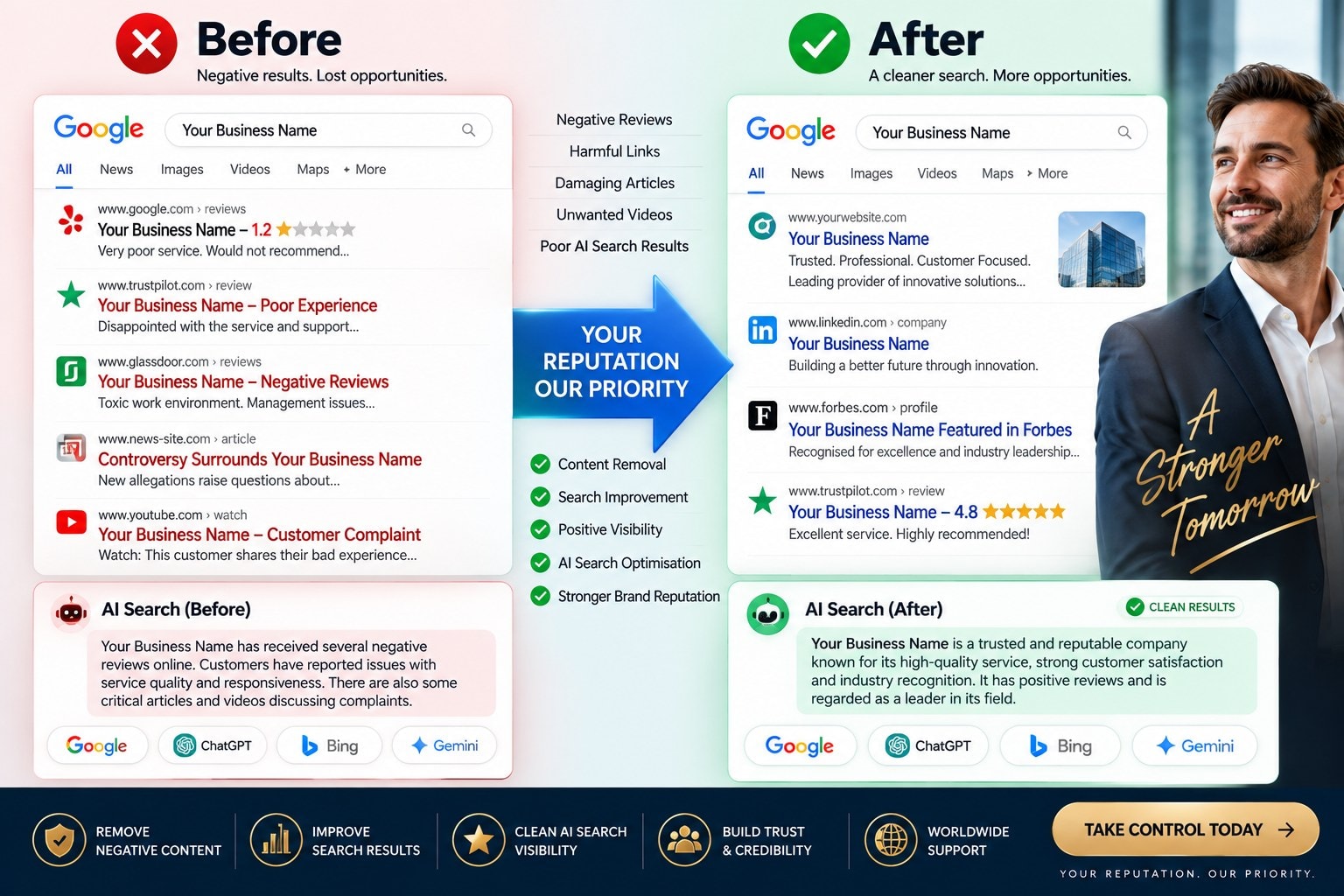
Protect your search results
If negative or inaccurate content is holding you back, our reputation management team can help.
What we need from you, and what you can expect from us
A Wikipedia project is a partnership with clear roles. Knowing them at the start avoids surprises and gives your article its best chance.
What we ask of you
- Share every article, review, award and mention you know of, good or bad
- Provide accurate dates, names and facts we can verify in sources
- Accept that the article will be neutral and may include sourced criticism
- Avoid editing Wikipedia yourself, or asking friends and staff to do it
- Be patient with Wikipedia’s review timeline, which we do not control
What you can expect from us
- A clear, honest notability view within 24 hours of your enquiry
- A written explanation of which sources are strong, weak or unusable
- A neutral draft you can review for factual accuracy before submission
- Open disclosure of our role, and updates at every stage of review
- Guidance on requesting future updates the right way, once your article is live
We also tell you when a Wikipedia article is not the right goal. For many growing businesses, earned press coverage and a strong, consistent online profile deliver more value today, and lay the groundwork for a page in future.
The promises behind every Wikipedia project
Wikipedia work is built on trust: yours, ours and the volunteer editors’. These are the standards we hold ourselves to.
What we always do
- Start with a free, honest notability check
- Tell you clearly if you are not ready, and why
- Declare our relationship with you on Wikipedia
- Submit new articles through Articles for Creation
- Write neutrally, with every claim supported by an independent source
- Refund you in full if your article is not accepted and live
What we never do
- Promise or “guarantee” approval by Wikipedia’s editors
- Claim to be “certified” by Wikipedia, which certifies no one
- Edit secretly or use multiple accounts
- Use press releases or sponsored articles as notability evidence
- Remove criticism or add praise to an existing article
- Invent facts, awards, figures or clients
What it feels like when your story is finally recognised
★★★★★“United Press built our brand from launch to nationwide recognition. Real media coverage gave new customers the trust they needed — our ROI has been over 100:1, which blows my mind.”
Annabelle SparksGlobal Head of Marketing
★★★★★“The team understood our industry and, more importantly, understood the story we needed to tell. Seeing our company featured across relevant publications gave us a much stronger presence when potential customers researched us.”
Olivia BennettMarketing Director
★★★★★“United Press helped us turn our company story into something journalists could genuinely engage with. The coverage gave our brand a level of credibility that was difficult to achieve through our own marketing channels.”
James WhitmoreFounder & CEO
Wikipedia page creation: frequently asked questions
Straight answers to the questions people ask us most about getting a Wikipedia page in the UK.
The basics
Can I hire someone to create a Wikipedia page?
Yes, as long as they follow Wikipedia’s rules. They must disclose that they are working for you, submit the article for independent review and write neutrally. The subject must also meet Wikipedia’s notability guidelines.
Can I create a Wikipedia page about myself or my company?
Wikipedia strongly discourages it because of the conflict of interest. If you do, you must disclose your connection and submit through Articles for Creation. Most self-written pages are declined for being promotional or lacking independent sources.
What qualifies a person or company for a Wikipedia page?
Significant coverage in multiple reliable sources that are independent of the subject. Popularity, revenue or social media following do not count on their own.
How famous do you have to be to get a Wikipedia page?
It is not about fame. It is about whether reliable, independent sources have written about you in depth. A regional business or a specialist academic can qualify; a well-known influencer with no independent coverage may not.
Is it free to make a Wikipedia page?
Anyone can create a Wikipedia account and submit a draft without charge. People hire professionals for the research, neutral writing, sourcing and review process, which are where most self-written drafts fail.
Is Wikipedia a business directory?
No. Wikipedia is an encyclopedia, and businesses are included only when independent sources show they are notable. Having a website, customers or staff is not enough.
Working with United Press
How does your Wikipedia service work?
A free notability check, a source audit, earned coverage if needed, a neutral referenced draft, disclosure and submission through Articles for Creation, then responses to reviewers until a decision is made.
How does booking work?
Every project is agreed in writing and booked in advance, before work begins. If your article is not accepted and live on Wikipedia, you receive a 100% refund for the article, issued within 14 days.
Do you guarantee approval?
No one can honestly guarantee approval, because Wikipedia’s volunteer editors decide. That is why you receive a 100% refund if your article is not accepted and live.
What if I am not notable yet?
We tell you honestly and, if you wish, help you earn independent press coverage first. When the sources exist, we return to Wikipedia.
Do you disclose your involvement on Wikipedia?
Yes, always. The Wikimedia Terms of Use require editors working for clients to disclose their employer, client and affiliation, and we follow that rule on every project.
Do you work with clients outside the UK?
Yes. We work with people and companies from every country, with the UK as our priority market, and can draft for English Wikipedia using international sources.
Can you create a page for my company and for me as founder?
Only if each subject is notable in its own right. A company being notable does not make its founder notable, and the reverse is also true.
Which Wikipedia guidelines apply to companies?
Companies are assessed under Wikipedia’s notability guideline for organisations and companies, which looks for in-depth, independent coverage of the company itself and is stricter about promotional or routine news.
Which guidelines apply to people?
People are assessed under the biography guidelines, with additional subject guidelines for creative professionals, academics, musicians and athletes. Articles about living people must meet extra standards of accuracy and sourcing.
Can you create Wikipedia pages in other languages?
Each language edition of Wikipedia has its own community and rules. We focus on English Wikipedia and can advise on whether another edition is appropriate.
Sources and press coverage
Do sponsored articles help me get a Wikipedia page?
No. Sponsored, partner and advertorial content is not independent, so Wikipedia editors do not accept it as evidence of notability, even in well-known publications.
Do press releases count as sources?
No. Press releases, including those syndicated to finance and news sites, are written by the subject and are not independent coverage.
Which publications does Wikipedia trust?
Wikipedia keeps a public list of how editors rate common sources. Titles such as Reuters, The Times, The Independent, USA Today, the BBC and the Financial Times are generally rated reliable.
Do interviews count?
Interviews where you mainly speak about yourself carry little weight. Independent reporting and analysis by the journalist is far more valuable.
How many sources do I need?
There is no fixed number. Editors usually look for multiple independent, in-depth sources. Two or three strong articles count for more than dozens of brief mentions.
Can you help me get the press coverage I need?
Yes. Earning coverage from journalists is our core work as a PR agency. It cannot be guaranteed, and we focus on genuine stories that reliable publications want to report.
Will I be able to approve the draft?
You can review the draft for factual accuracy before submission. Because Wikipedia must be neutral, we cannot add promotional language or remove sourced information at a client’s request.
What happens to my article over time?
Volunteer editors may update, expand or trim it as new sources appear. That is normal, and it is part of what makes Wikipedia trusted.
Can you help a heritage farm or rural business get a page?
Yes, if independent sources such as regional newspapers, historical records or agricultural publications have covered it in depth. Long-established farms, estates and co-operatives sometimes have exactly that history.
What is Articles for Creation?
Articles for Creation is Wikipedia’s review process for new drafts. An experienced volunteer checks notability, sourcing, neutrality and copyright before deciding whether a draft can move into the main encyclopedia.
Is it safe to trust agencies that contact me about a Wikipedia page?
Be cautious. Wikipedia has warned about people who approach businesses claiming to be editors or administrators and demanding a charge to publish or protect articles. Genuine editors do not sell approval.
Review, deletion and updates
How long does Wikipedia review take?
Articles for Creation reviews can take anywhere from a few weeks to several months, depending on Wikipedia’s backlog of drafts.
Why do Wikipedia pages get deleted?
Most often for lack of notability, promotional tone, weak or non-independent sources, copyright problems or undisclosed commercial editing.
Can my article be deleted after it is accepted?
Yes. Any article can be nominated for deletion later if editors believe it does not meet the guidelines, which is why we only build on strong, independent sources.
Can I edit my Wikipedia page after it goes live?
You should not edit it directly. Instead, request changes on the article’s talk page with reliable sources, and let independent editors decide.
Can negative information appear on my page?
Yes, if reliable sources report it. Wikipedia aims to be neutral, so articles reflect what sources say, good and bad. We explain this before any project begins.
Can you fix an existing Wikipedia page about me?
We can help you request corrections through the proper talk page process, supported by reliable sources. We do not edit articles secretly or remove sourced criticism.
What happened to my declined draft?
Declined drafts can usually be improved and resubmitted. We review the reviewer’s comments and tell you honestly whether resubmission makes sense yet.
Search, Google and AI
Does a Wikipedia page help my Google rankings?
Wikipedia’s external links are nofollow, so it is not a link-building tactic. Its value is visibility and trust: articles often rank highly for names and can feed Google’s knowledge panels.
Will a Wikipedia page give me a Google knowledge panel?
It can help, as Google often uses Wikipedia for knowledge panels, but Google decides. Knowledge panels can also appear without a Wikipedia article.
Do AI assistants use Wikipedia?
Yes. Tools such as ChatGPT, Gemini and Perplexity rely heavily on Wikipedia and the sources it cites when describing people and organisations.
Is a Wikipedia page worth it?
For notable people and organisations, a neutral, well-sourced article is one of the most trusted profiles you can have online. For those not yet notable, earned press coverage is the better first investment of time.
Can a Wikipedia page help my business or personal brand?
Indirectly. Wikipedia is not marketing, but a neutral, well-sourced article gives people a trusted summary of who you are, which supports credibility with partners, journalists and investors.
What information do you need for a notability check?
Your full name or company name, your website, and links to any articles, reviews or awards about you. The more independent coverage you can share, the more accurate our assessment.
How do I get started?
Use the form on this page to send your name or company and any coverage you have. We reply within 24 hours with a free notability check and an honest recommendation.
Years of work deserve more than a profile you wrote yourself. Let the record show what you have built.
Somewhere right now, a journalist, an investor, a partner or an AI assistant is looking for a neutral account of who you are. If the independent sources exist, a well-written Wikipedia article can give them one that lasts. If they do not exist yet, the right press coverage can change that.
You do not have to gamble on a “guaranteed” promise or risk a deletion notice with your name on it. Start with a free notability check. We will tell you the truth about where you stand, and you receive a 100% refund if your article is not accepted and live.