Looking for the best PR for AI research in the UK for 2026? UK AI research PR — for AI research labs, foundation model teams, published papers, and research milestones. AI research PR requires technical literacy to navigate embargoed scientific publications, benchmark validation, and the delicate balance between commercial interest and academic credibility.
UK AI research publications in 2026
- Nature (peer-reviewed).
- Science (peer-reviewed).
- MIT Technology Review.
- FT Tech.
- Sifted AI.
- The Information.
Why PR for AI research needs precision
Artificial intelligence is one of the most covered topics in the world, and also one of the most hyped. Journalists receive daily claims of breakthroughs, and they have become wary of results that are overstated, poorly benchmarked or not yet reviewed. Good PR for AI research earns attention by doing the opposite: explaining clearly what a model or method can do, how it was tested and what it cannot yet do, so your work is trusted by editors, peers and partners.
AI research teams also speak to very different audiences: other researchers, enterprise buyers, investors, policymakers and the public. Each needs the same facts told at a different level of detail, and PR for AI research works best when those versions are planned together from the start.
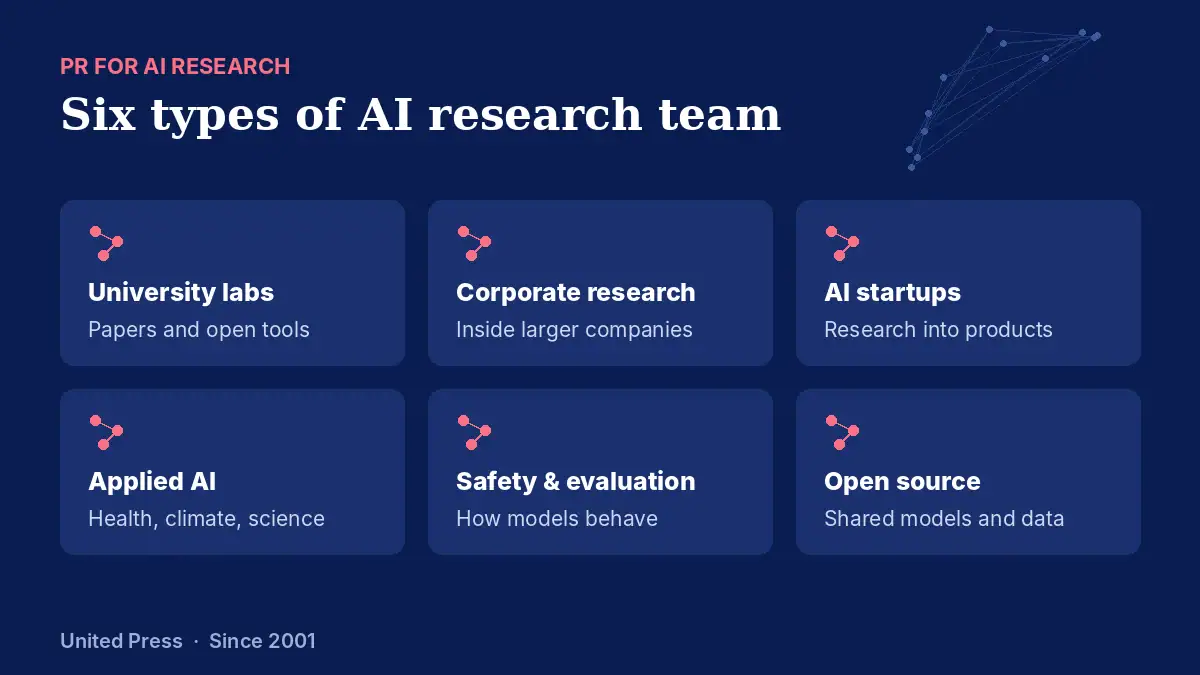
AI research teams we work with
- University AI labs publishing papers and open-source tools.
- Corporate research teams inside larger technology and industry companies.
- AI startups turning new research into products.
- Applied AI groups in health, climate, finance and science.
- AI safety and evaluation teams testing how models behave.
- Open-source communities building shared models, datasets and tools.
AI research stories that earn coverage
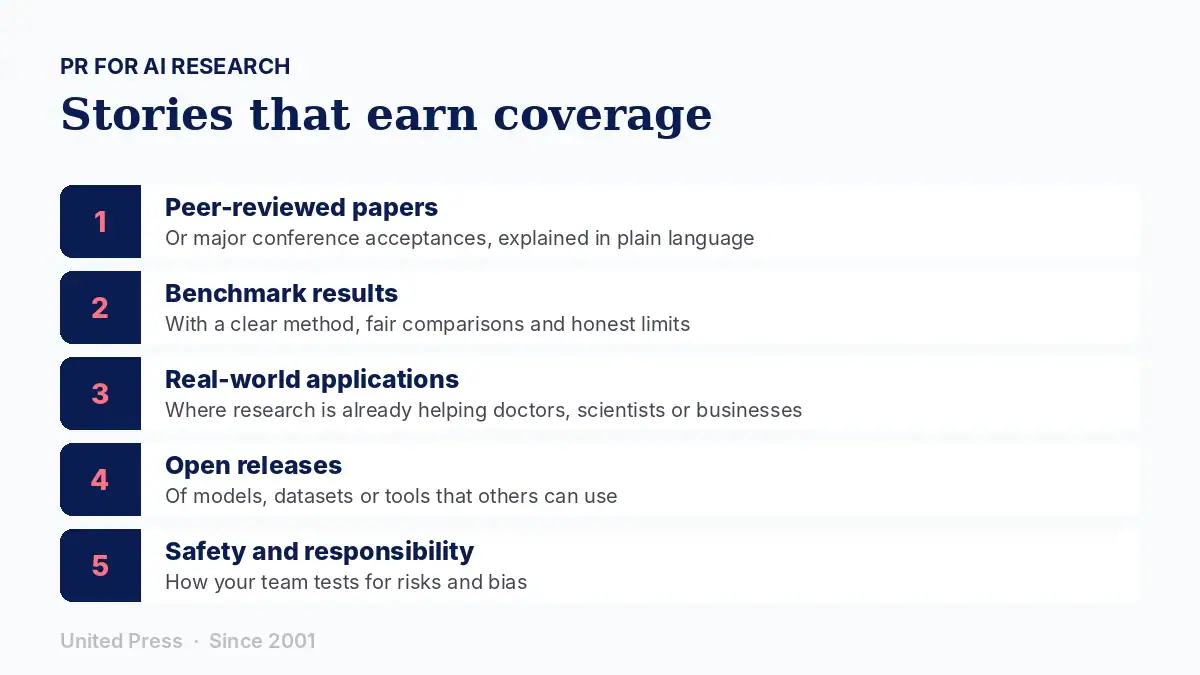
Science, technology and business editors look for research that is new, explained well and relevant to real life. These angles work well in PR for AI research:
- Peer-reviewed papers or major conference acceptances, explained in plain language.
- Benchmark results with a clear method, fair comparisons and honest limits.
- Real-world applications where research is already helping doctors, scientists or businesses.
- Open releases of models, datasets or tools that others can use.
- Safety and responsibility: how your team tests for risks and bias.
- The researchers themselves: the people, questions and careers behind the work.
Safety and evaluation in the public conversation
Questions about how AI systems are tested now shape much of the coverage. The UK government’s AI Security Institute explains its work on evaluating advanced AI, and journalists often ask research teams how their own testing compares. Being ready with clear, honest answers helps your work stand out.
In PR for AI research, we help your team explain evaluation methods, known limitations and safeguards in language non-specialists can follow. We never suggest government approval of your work. Clear explanations make PR for AI research more credible with technology and policy editors, and they reassure partners who need to understand risk before adopting new models.
Avoiding hype while still making news
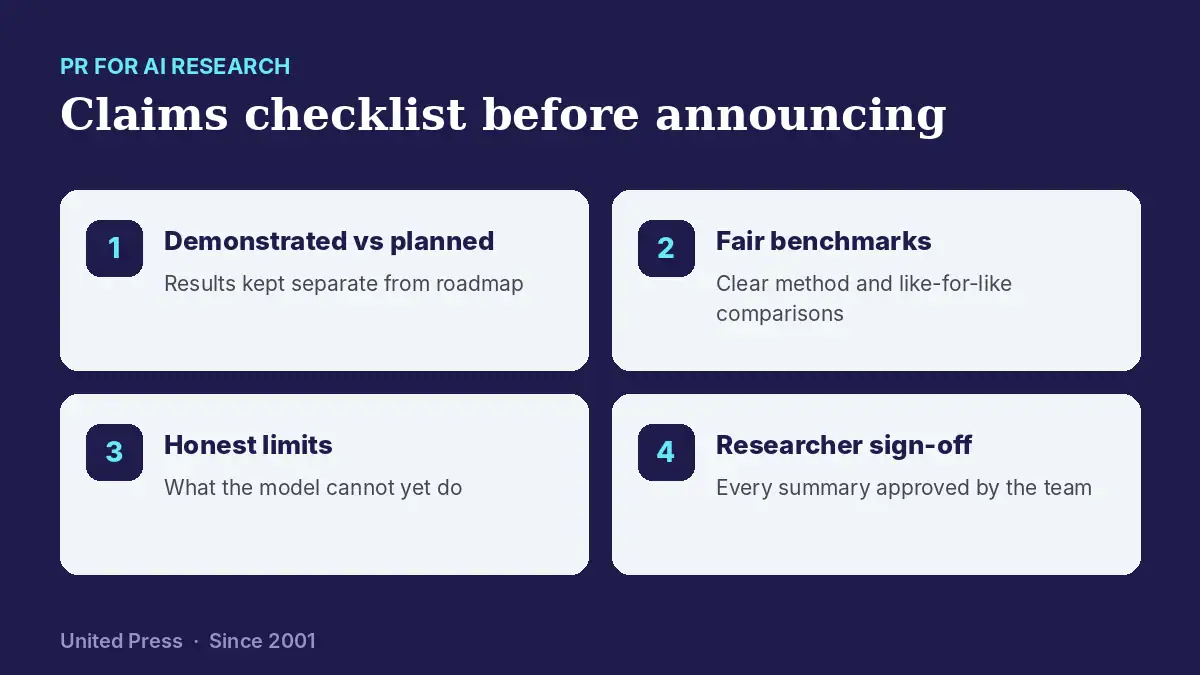
Overstated claims damage reputations quickly in AI. We work with your researchers on every announcement to separate what was demonstrated from what is planned, use benchmark results fairly and avoid phrases such as “human-level” unless they are truly supported. A short technical note and a researcher who can explain the work make editors far more likely to cover it accurately. That discipline is what keeps PR for AI research credible over many announcements, not just one.
Reaching enterprise, investors and talent
Research coverage does more than build academic reputation. Enterprise buyers use it to judge which teams to partner with, investors use it to assess technical depth, and talented researchers use it to decide where to work. We plan PR for AI research so that one paper or release can be shaped into stories for each of these audiences, with business and recruitment angles alongside the science. Over time, PR for AI research built this way gives your team a steady public profile between major papers, and PR for AI research becomes a reliable way to attract partners rather than a one-off launch.
A 90-day PR plan for AI research teams
- Weeks 1 to 2: map upcoming papers and releases, agree spokespeople and set an approval process with researchers.
- Weeks 3 to 6: secure coverage for a first paper, benchmark or release, managed around any embargo.
- Weeks 7 to 10: add researcher profiles, a safety or evaluation explainer and expert commentary on AI news.
- Weeks 11 to 12: share coverage with partners, investors and candidates, review results and plan the next quarter.
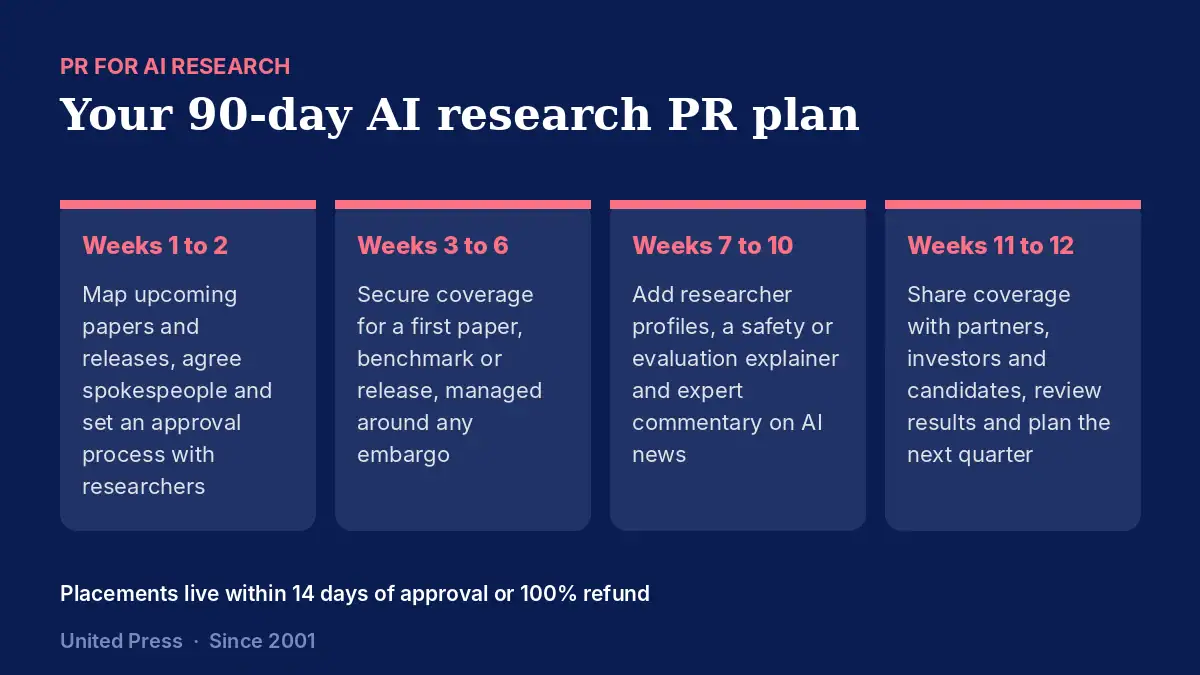
Placements go live by the date agreed in writing, or you receive a 100% refund.
Related reading: our guides to AI tech startup PR, PR for research institutes and PR for universities.
PR for AI research in Google and AI search
Researchers, buyers and journalists now ask ChatGPT, Gemini, Perplexity and Google AI questions like “leading UK AI research labs” or “who is working on AI for drug discovery”. These tools rely heavily on trusted publications when they decide which teams to mention.
Editorial coverage gives them credible sources that name your team and explain your work accurately. No one can guarantee an AI mention, but consistent PR for AI research gives you a much better chance of appearing in those answers, while high-authority links strengthen your website in Google. Many teams also pair features with press release distribution.
PR for AI research: questions
How do AI research teams get media coverage?
Lead with peer-reviewed or well-tested results explained in plain language, real-world applications and researchers who can talk clearly about the work. In PR for AI research, we manage embargoes, check every claim with your team and confirm each live link.
How can AI announcements avoid hype?
Separate what was demonstrated from what is planned, present benchmarks fairly with their limits, and avoid sweeping claims such as “human-level”. Precise language builds lasting trust with journalists.
Can PR help an AI research team appear in AI search?
It can improve your chances. AI tools such as ChatGPT and Gemini rely on trusted publications when they describe organisations. No one can guarantee an AI mention, but press coverage is one of the strongest signals an AI research team can build.
Communicating AI research in the UK
AI is one of the most covered subjects in the UK press, but journalists are wary of hype. Research that is explained clearly, with honest limits, earns trust and repeat coverage.
Who covers AI research
- Science and technology correspondents at the BBC, The Guardian, The Times and the FT.
- New Scientist and Wired UK — research findings and what they mean.
- The Register and Computer Weekly — technical and enterprise readers.
- UKTN and Sifted — AI startups, spinouts and funding.
Work with the research timetable
- Peer-reviewed journals such as Nature run strict embargoes. Plan press work around the publication time and keep to the embargo.
- Preprints on arXiv are not peer-reviewed. Say so clearly in any press material.
- The Science Media Centre in London connects journalists with experts on big science stories. Being available for expert comment there builds a reputation.
How to explain the work
- Lead with what the research means for people, in one plain sentence.
- Explain the method briefly: data, model size, test set.
- Say what the results do not show. Journalists respect this.
- Offer a researcher who can talk without jargon, plus a diagram or demo.
Policy context
UK AI policy is active, including the work of the AI Security Institute and the Alan Turing Institute. Research with safety, fairness or public-sector angles often gets policy and national coverage.
Questions we are often asked
Can a startup’s own research get covered?
Yes, if the method is sound and the result is clear. Independent experts may be asked to comment, so be ready.
Should we publish on arXiv before press?
Many teams do, but journalists will note it is not peer-reviewed. Plan your messaging around that.
How do we avoid hype?
Use exact numbers, compare against fair baselines and explain limits. Avoid words like breakthrough unless experts agree.