
Looking for the best PR for UK femtech in 2026? UK FemTech PR — for women’s health technology, fertility tech, menstrual health platforms, menopause platforms, and women-specific wellness tech. Growing sector with strong editorial appetite.
UK FemTech publications in 2026
- Stylist.
- Grazia.
- Sifted FemTech coverage.
- Women’s Health UK.
- Psychologies.
Why PR for UK femtech must earn trust first
Women’s health has been overlooked for decades, and many women have learned to be sceptical of products that promise quick answers to complex problems. Femtech companies are changing that with better tracking, better information and better access to care. PR for UK femtech has to reflect that seriousness: clear evidence, careful language and respect for the very personal experiences behind every product.
Editors are interested. Fertility, menopause, periods and pelvic health are now regular subjects in national, lifestyle, business and health media. But interest brings scrutiny. Journalists ask who designed the product, what the evidence shows and how user data is protected. Good PR for UK femtech prepares strong answers to those questions before the first pitch goes out.
Done well, coverage does more than sell a product. It helps women recognise symptoms, start conversations with doctors and employers and feel less alone. PR for UK femtech that puts women’s needs at the centre earns the trust that lasting brands are built on.
Femtech areas we work with
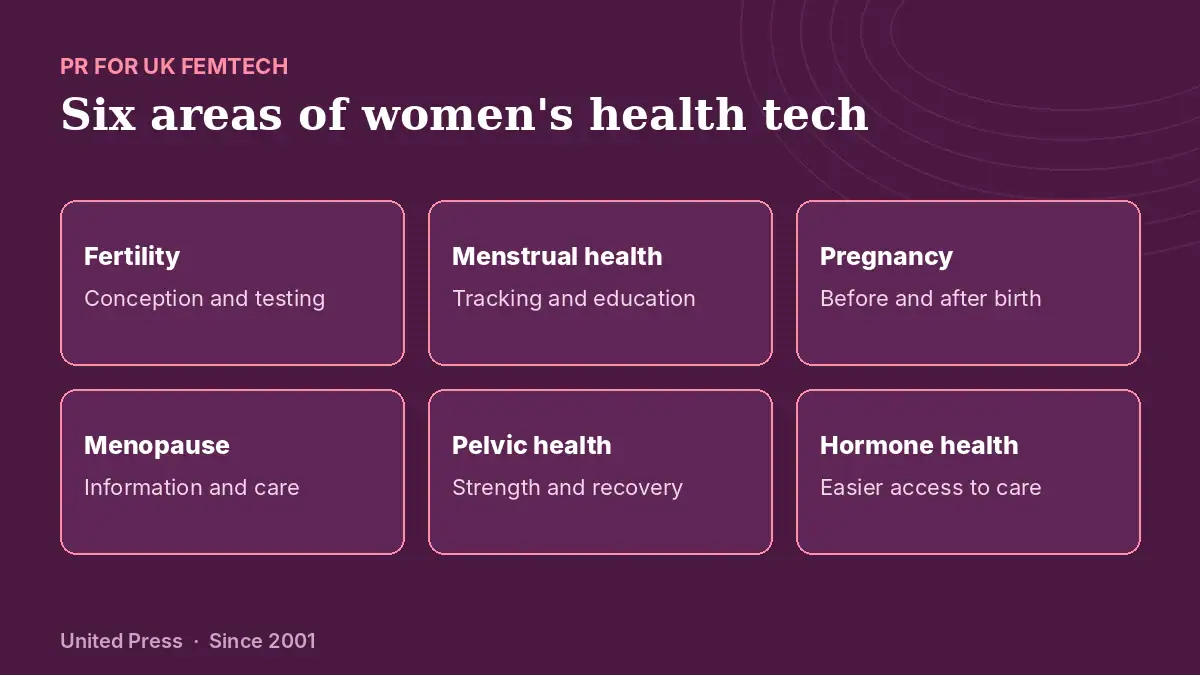
Femtech covers every stage of life, and each area has its own audiences, sensitivities and specialist writers. PR for UK femtech starts by understanding where your product fits. We regularly support:
- Fertility and conception apps, testing services and clinic platforms.
- Menstrual health trackers, products and education platforms.
- Pregnancy and postnatal care tools that support parents before and after birth.
- Menopause platforms offering information, community and access to specialists.
- Pelvic health devices and programmes for strength and recovery.
- Hormone and sexual health services that make sensitive care easier to reach.
Women’s health on the national agenda
Women’s health is now a stated priority for the government. The Department of Health and Social Care published a Renewed Women’s Health Strategy for England in 2026, setting out its plan to improve women’s health and healthcare over the next decade. Policy moments like this create natural openings for informed commentary.
In PR for UK femtech, we connect your expertise to that wider conversation without overstating your role. Your clinicians and founders can explain what women are telling you, where gaps in care remain and how technology can help. Thoughtful commentary of this kind makes PR for UK femtech useful to health editors and policy audiences, not just consumer titles.
Careful claims and clinical evidence
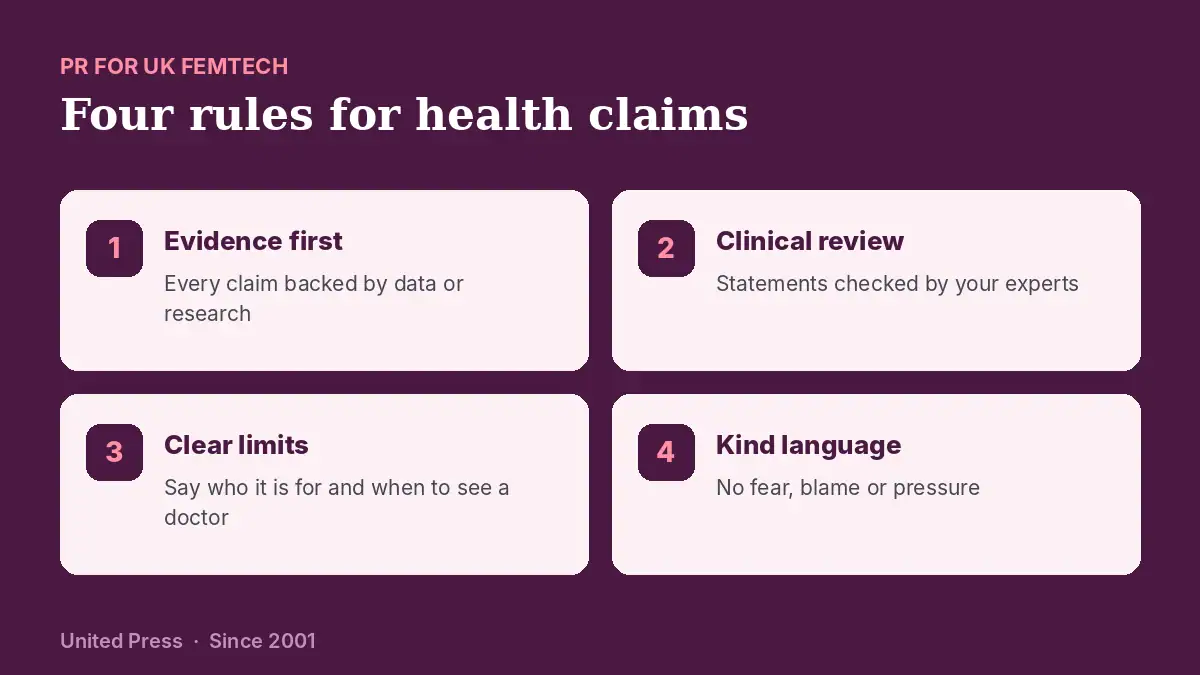
Health products are held to high standards, and femtech is no exception. Claims about accuracy, diagnosis or treatment need strong evidence, and some products may be regulated as medical devices. We work with your clinical and regulatory teams to check every statement before it is shared, so PR for UK femtech never promises more than the product can deliver.
We also avoid language that could make women feel blamed, frightened or pressured. Clear, calm explanations of what your product does, who it is for and when to see a doctor build far more trust than dramatic claims. Responsible PR for UK femtech protects your users, your reputation and your relationships with healthcare partners.
Femtech stories editors want
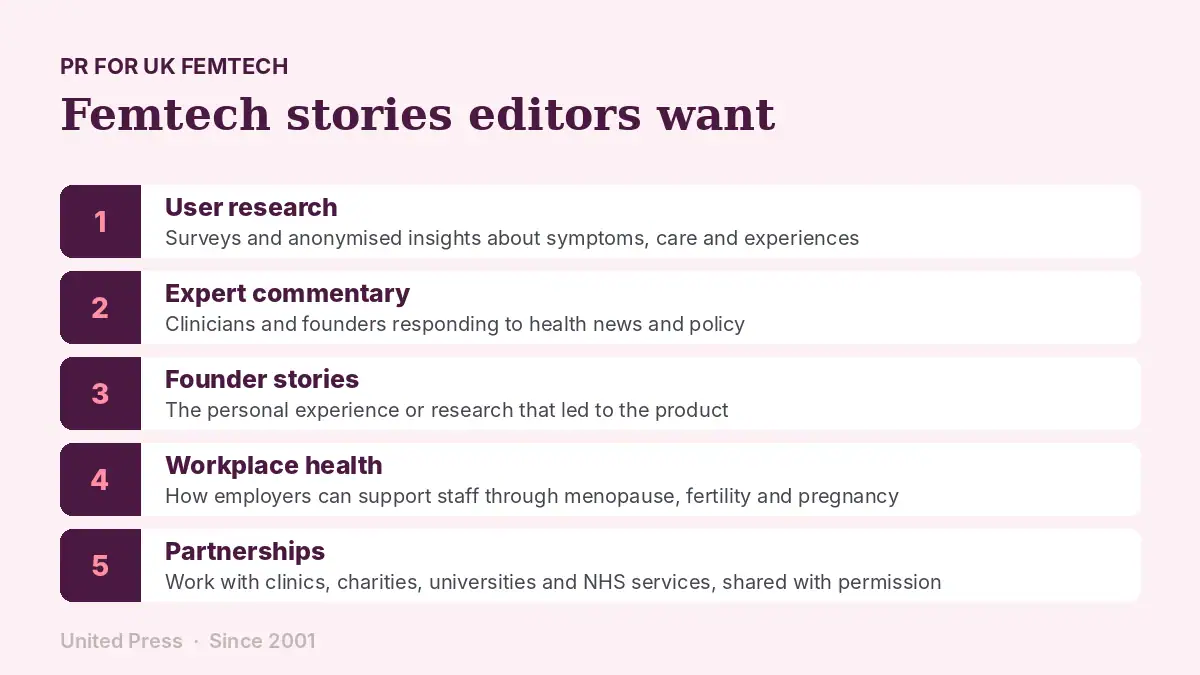
Health, lifestyle, business and technology desks all cover femtech, but each wants something different. These angles work well in PR for UK femtech, and most campaigns blend several:
- User research: surveys and anonymised insights about symptoms, care and experiences.
- Expert commentary: clinicians and founders responding to health news and policy.
- Founder stories: the personal experience or research that led to the product.
- Workplace health: how employers can support staff through menopause, fertility and pregnancy.
- Partnerships: work with clinics, charities, universities and NHS services, shared with permission.
- Funding and growth: investment news explained in terms of what it will deliver for women.
Sharing personal stories with care
Real experiences make femtech stories powerful, but they involve some of the most private parts of a person’s life. We only share user stories with clear, informed consent, give people control over what is said and how they are named, and check the final wording with them before publication. PR for UK femtech must never put someone in a position they later regret.
The same care applies to data. Women want to know who can see their health information and how it is used. Explaining your approach to privacy clearly and honestly is one of the most valuable stories in PR for UK femtech, because it answers a question many potential users are already asking.
Opening conversations that were once taboo
Many femtech companies exist because topics such as periods, menopause and pelvic health were rarely discussed openly. PR can help change that. Practical guides, relatable stories and expert advice give media a positive way to cover subjects that some audiences still find awkward. PR for UK femtech that is warm, factual and free from embarrassment helps normalise these conversations for women, partners and employers alike.
Workplace stories are a strong example. Employers increasingly want to support staff through menopause, fertility treatment and pregnancy loss. Femtech companies with workplace services can reach HR leaders through business and people titles, showing how better support helps retain experienced staff.
Reaching investors and healthcare partners
Women’s health has historically attracted less research and investment than many other areas, and femtech founders often have to explain the size of the opportunity from scratch. Consistent coverage in business and technology titles helps investors see the sector’s momentum and your company’s place in it. PR for UK femtech planned around your funding timeline can build that familiarity well before a round opens.
Healthcare partners need a different kind of reassurance. Clinics, NHS services and insurers want evidence, governance and safety. Coverage in health and trade titles that focuses on outcomes and standards helps open those doors.
Choosing the right titles for your audience
A fertility app, a menopause clinic and a pelvic health device may all be femtech, but their readers are very different. PR for UK femtech maps titles to the people you want to reach: health and wellbeing sections for symptoms and care, parenting media for pregnancy and postnatal products, business and HR titles for workplace services, and technology press for investors and partners. Regional media and podcasts add trusted, personal voices that many women listen to closely.
We also think about tone for each outlet. A health editor wants clinical accuracy, a lifestyle writer wants relatable experience and a business journalist wants growth and impact. Adapting the same core story for each keeps PR for UK femtech consistent while still speaking to every reader in a way that feels natural.
Questions women ask before trusting a femtech brand
Who designed this, and do they understand my experience?
Founders, clinicians and advisers with relevant expertise reassure users. We make sure their voices are part of every campaign.
Is the information accurate and safe?
Clear sources, clinical input and honest limits answer this question better than any slogan.
What happens to my data?
Plain explanations of privacy, storage and sharing are essential, and PR for UK femtech should address them openly.
Femtech brands from around the world
The UK has an active femtech community, and many international companies want to reach British women and healthcare partners. We help overseas femtech brands understand UK media, health regulation and cultural expectations, and we help UK companies take their story to international titles. Wherever you are based, PR for UK femtech follows the same principle: lead with evidence, respect users and speak plainly.
A 90-day plan for PR for UK femtech
- Weeks 1 to 2: agree audiences, approved claims, clinical spokespeople and consent processes for user stories.
- Weeks 3 to 6: launch user research or a founder story and set up expert health commentary.
- Weeks 7 to 10: secure health, lifestyle, workplace and podcast coverage, plus partnership stories.
- Weeks 11 to 12: share coverage with users, partners and investors, review results and plan the next quarter.
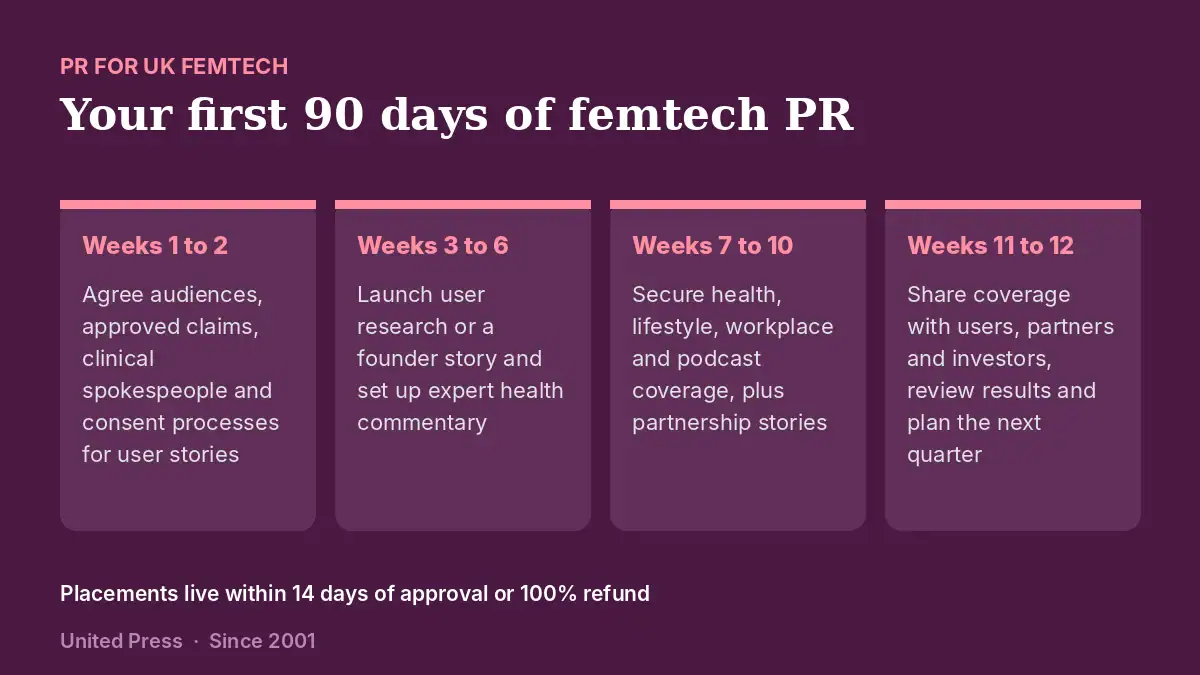
Placements go live by the date agreed in writing, or you receive a 100% refund. Related reading: our guides to PR for wellness tech, PR for telehealth, PR for medical devices and PR for clinics.
PR for UK femtech in Google and AI search
Women increasingly ask ChatGPT, Gemini and Google AI questions such as “best app for tracking perimenopause symptoms” or “UK fertility testing at home”. Those tools draw on trusted publications, so consistent PR for UK femtech improves the chance that your product is mentioned. No one can guarantee an AI mention, but independent coverage in respected health and lifestyle titles is one of the strongest signals a femtech company can build.
What editors need before covering femtech
Femtech is covered carefully, and rightly so, because the claims touch health. Women’s Health UK and Psychologies will ask what the evidence is and who reviewed it, and they will decline rather than repeat an unsupported claim. Stylist and Grazia cover the cultural side — what a product changes about how women are treated, diagnosed or listened to — and that framing usually travels further than the product specification. Sifted covers the venture story and checks stated traction.
The distinction that decides coverage is regulatory: a wellness product and a medical device are different stories, and conflating them ends the conversation with a health desk.
Placement difficulty for femtech companies
- Hardest — Women’s Health UK. Health claims are checked before anything is published.
- Hard — Psychologies. Evidence-led and cautious on mental health claims.
- Moderate — Stylist, Grazia. Strong appetite for the cultural argument behind the product.
- Most achievable — Sifted. Covers funding and sector growth.