Before the raise
Investors search you the week they meet you. Coverage that predates the conversation reads as substance; coverage published during the raise reads as a campaign, and experienced investors know the difference.

PR Agency for Startups · United Kingdom
Most startups do not have a press problem. They have a story problem. We tell you which one you have before you spend a penny, then earn the coverage that actually moves customers, investors and AI search.

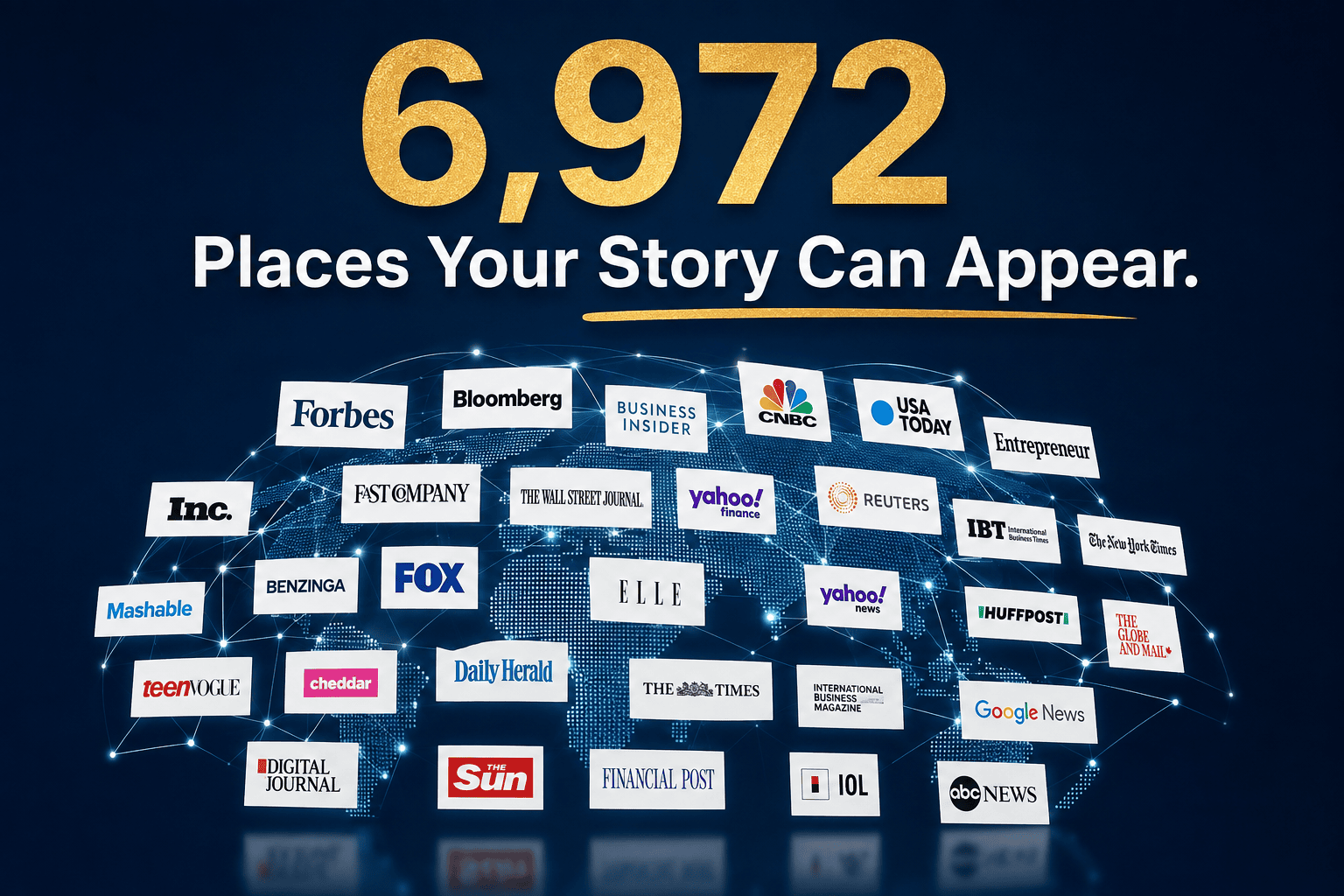

Startups we have placed in





Definition
A startup PR agency earns editorial coverage for early-stage companies — in national, business, trade and tech press — so that customers, investors and search engines find independent proof the company is real, funded, and worth taking seriously.
It is not the same job as corporate PR. A corporate team protects an established reputation. A startup has no reputation yet, no press archive, and usually no news beyond its own existence. The work is finding the story inside a company that has not made one yet.
The search terms vary — startup PR agency, PR agency for startups UK, digital PR for startups, best PR firms for tech startups — but founders are asking one question underneath all of them: who can get us covered without wasting our runway?
Timing
Coverage bought at the wrong moment is money burned. These are the three windows where press changes an outcome rather than decorating one.
Investors search you the week they meet you. Coverage that predates the conversation reads as substance; coverage published during the raise reads as a campaign, and experienced investors know the difference.
You get one launch. The difference between a paragraph in a trade title and a genuine feature is usually the angle, decided weeks before the date.
Enterprise buyers and procurement teams check whether you will still exist in two years. Independent press is the cheapest proof you can give them.
Difference
A corporate has ten years of press to build on. A startup starts at zero, so the first three pieces matter more than the next thirty.
A twelve-month retainer that produces nothing for five months is a corporate luxury. Startups need the first result to arrive while the money still means something.
Nobody writes about a seed-stage product. They write about the person who left a job to build it, and the problem they saw that others did not.
Proof
Features, profiles and expert commentary earned for founders and early-stage companies. Written by journalists, placed on editorial merit — not bought as advertising.





Where you land
Which masthead matters depends on who you are trying to convince. A pre-seed founder chasing investors needs different titles from a Series A company chasing enterprise buyers.
Services
Product, company or market launch, pitched with an angle editors can justify running — not a press release announcing that you exist.
Rounds covered properly: what the money is for, what you learned raising it, and why a reader who is not an investor should care.
The story behind the company. This is what ranks for your name and what investors read before a meeting.
Editorial placements that earn genuine links and lasting search visibility, rather than paid listings that decay.
Coverage structured so ChatGPT, Gemini, Perplexity, Claude, Copilot and Google AI Overviews can find and cite independent sources about your startup.
You become a founder journalists call for a quote on your sector. The cheapest sustained coverage there is.
By stage
Process
We look at what you have built and tell you whether there is a story an editor will run — before you commit anything.
We find the thing only your startup can say, and match it to the desks that cover your sector.
Written by a person to the publication’s standard. You see and approve every word.
Pitched, chased, published. You get the coverage, the links, and a record that works in search and AI answers.
Who it is for
Not every startup needs press, and the ones that do need different things. These are the situations where coverage changes the outcome rather than decorating it.
Selling to businesses who check whether you will still be trading next year. Trade and tech press is the proof, and the buying committee reads it.
Where a single national or lifestyle feature can move stock in a week, and where being in the round-up matters more than being in the news.
Credibility is the product. Coverage has to be accurate and compliant, and getting it wrong costs more than getting nothing.
Investors search you between the first meeting and the term sheet. What they find in that window is worth more than another slide.
You launched, got a burst of coverage, then nothing for a year. That gap reads as a company that stalled, and it is fixable.
Something unhelpful ranks for your company name, or nothing does at all. Both are solved the same way: credible material, published over time.
Practical
Whether you hire anyone or not, these decide whether a UK editor runs your story. Most startup pitches fail on the first two.
A round is news to you and your investors. Editors want what the money reveals about the market, and what you learned raising it.
Your own operating numbers are the strongest asset a startup has with a UK desk. Even a small honest dataset beats an opinion.
Tech, business and trade desks want different things. A pitch to a general inbox is usually read by nobody.
UK journalists work same-day deadlines. The founder who replies fast gets quoted; the one who replies tomorrow does not.
Editors check. A number with a baseline and a period survives that check. A superlative does not.
The coverage that helps in a raise is the coverage that already existed six months earlier. Starting when you need it is starting late.
Why us
If your story will not stand up to an editor, we say so at the first call. A startup cannot afford to find that out three months in.
Real desks, real journalists, real editorial judgement. Paid listings look paid, and investors can tell.
Being cited by ChatGPT and Perplexity when someone asks about your category is now worth as much as a ranking.
Comparison
| Conventional retainer | United Press | |
|---|---|---|
| Commitment | Six to twelve months, paid monthly from day one. | Start with a single placement and scale only if it works. |
| First result | Often month three or four, after strategy decks. | Weeks, because we start from the story you already have. |
| Who writes | Frequently a junior account executive. | Writers who have placed with these desks before. |
| If there is no story | The retainer runs anyway. | We tell you at the first conversation and decline the brief. |
| What you are left with | Activity reports and a media list. | Published coverage with dates, links and search visibility. |
Questions
It depends on the titles and the ambition, and anyone quoting before hearing your story is guessing. Tell us the outcome you need and we will tell you honestly what it takes.
When nobody is searching you yet and you have no customers to lose. Spend on distribution first. The moment investors or enterprise buyers start checking you out, press earns its keep.
Editors decide what runs, and any agency promising otherwise is describing advertising. What we commit to is an honest assessment first, and nothing published without your approval.
Digital PR usually means coverage chased for links and search visibility. Startup PR includes that, but also the founder story, launches and funding news that investors and customers read.
A single placement typically takes a few weeks from brief to publication. Changing what search returns for your company name takes a few months of consistent work.
No, and relying on it is a trap. Data you own, a contrarian view of your market, or a genuine customer outcome are all more interesting to editors than a round.
It is the main route. Assistants summarise independent sources. With none, your startup does not appear in the answer at all, however good your own site is.
Yes, where there is a real story. Pre-revenue usually means the founder is the story rather than the product, and that is a perfectly good place to start.
An hour of the founder’s time, honest numbers where you have them, and quick replies when a journalist has a deadline. That last one matters more than founders expect.
Our desks are strongest in the UK and we place internationally where the story fits. If a market is outside our reach, we say so rather than take the brief.
Send us the company, the stage and what you need to be found for. We will tell you honestly whether there is a story an editor would run, which publications fit, and what it would take — free, no obligation, and 24×7 if you are in another time zone.
Related: PR for entrepreneurs · guest post and editorial placements · consumer tech PR