Local Reputation Management · United Press
Why Reviews and Map Listings Decide Which Local Business Wins the Call
For a business that serves a town, a postcode or a catchment of a few miles, the deciding moment rarely happens on a website. It happens in the Google map pack, on a Google Business Profile, and in the star ratings a customer scans before they tap "call" or "directions". A plumber with a 4.8 average and forty recent reviews will take the enquiry ahead of an equally skilled rival with a stale, unmanaged listing. Reputation management for local businesses in the UK is the discipline of making sure that first impression is accurate, competitive and defensible.
This is where reputation quietly turns into revenue. Ratings, review volume, review recency and the quality of your replies all feed the signals that decide who appears in the top three local results. Manage them deliberately and you compound an advantage. Ignore them and a single unfair review, or a competitor's tidier profile, can cost you enquiries you never even knew existed.
Which Local Businesses Live and Die by Their Online Reviews
Some sectors feel the effect more sharply than others, because the customer is choosing locally, urgently and on trust. Trades, such as electricians, roofers, plumbers and builders, are judged on reliability before anyone has met them, and a handful of angry reviews can undo years of good work. Clinics and healthcare practices, including dentists, physiotherapists, opticians and private GPs, deal with patients who research anxiously and read reviews closely. Restaurants, cafes and takeaways depend on ratings that update in real time as diners decide where to eat tonight. Salons, barbers and beauty clinics trade almost entirely on reputation and repeat visits. Estate agents handle the largest transaction most people ever make, so a poor review pattern is disproportionately damaging. And professional services, from accountants and solicitors to letting agents and consultants, win instructions on credibility that reviews either build or erode. For all of them, the review profile is not a vanity metric. It is the shop window.
Removing Fake, Unfair and Malicious 1-Star Reviews
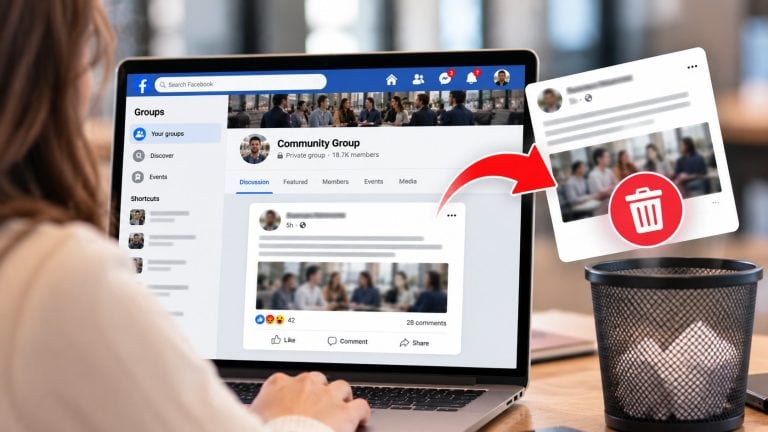
Not every negative review is honest, and not every honest review is fair. Local businesses are routinely targeted by fake Google reviews, reviews left by people who were never customers, reviews meant for a competitor, retaliatory posts after a dispute, and coordinated one-star attacks. Google and Facebook both maintain content policies that prohibit reviews containing hate speech, harassment, conflicts of interest, off-topic rants, personal information or plainly fabricated claims. The practical challenge is that platforms will only act when a review is presented against the specific policy it breaches, with clear supporting evidence.
Our approach is evidence-led and honest about the limits. We assess each review against the platform's own rules, document the breach precisely, and escalate it through the correct reporting and appeal channels rather than relying on a single "report" click that algorithms often ignore. A review that simply reflects a genuine bad experience will not be removable, and we will tell you so plainly. Where a review is fabricated, defamatory or in clear breach of policy, a properly argued case has a realistic chance of removal, and a considered public reply protects your reputation in the meantime.
Protecting Your Google Business Profile and Maps Listing
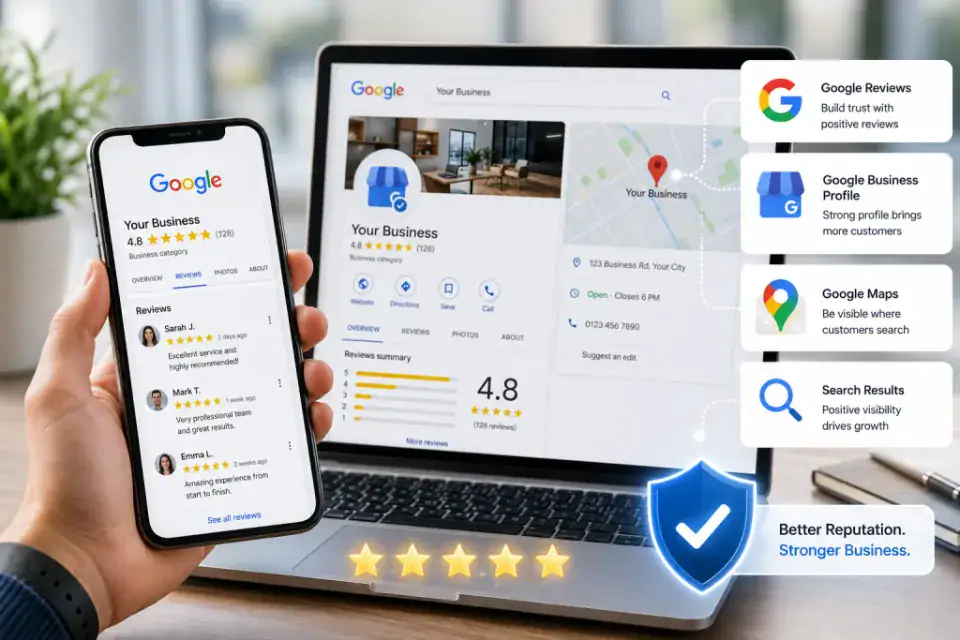
Your Google Business Profile is one of the few assets that strangers can edit. Anyone can "suggest an edit" to your address, opening hours, phone number or category, and competitors have been known to exploit this, quietly marking a rival as permanently closed, changing a pin location, or altering a phone number so calls are lost. Because the listing feeds Google Maps directly, an unnoticed change can silently divert enquiries for weeks.
Protecting the profile means claiming and verifying ownership, locking down accurate name, address and phone (NAP) details, choosing the right primary and secondary categories, and monitoring the listing for unauthorised edits, spam suggestions and fraudulent duplicate profiles. It also means watching the questions-and-answers section, where a misleading answer can sit unchallenged, and keeping photos, services and opening hours current so the profile reflects the business as it actually operates. Vigilance here is the difference between a listing that works for you and one a competitor can tamper with.
The Local Map Pack and How Reputation Drives Your Ranking
Google ranks local results on three broad signals: relevance (how well your profile matches the search), distance (how close you are to the searcher) and prominence (how established and well-regarded your business appears). Reputation feeds directly into prominence. A higher average rating, a steady flow of recent reviews, and genuine engagement with feedback all signal to Google that a business is active, trusted and worth surfacing in the coveted top-three map pack.
Recency matters as much as volume. A business earning a few authentic reviews every month reads as alive and busy; one with a burst of reviews two years ago and silence since reads as dormant. Replying to reviews, positive and negative alike, adds fresh, keyword-relevant content to the profile and demonstrates the active management that Google rewards. Reputation and local ranking are not separate projects. Improving one lifts the other, which is why a joined-up strategy outperforms scattered fixes.
Citations, Listing Accuracy and Consistent Business Data
Beyond Google, your business is listed across dozens of directories and data sources, from Bing Places, Apple Maps and Yell to sector platforms such as Checkatrade, and each of these is a citation. Search engines cross-reference these listings to confirm your business is real and consistent. When your name, address and phone number match everywhere, that consistency builds trust and prominence. When they conflict, an old address here, a former phone number there, a slightly different trading name elsewhere, the mixed signals dilute your authority and can suppress your ranking.
Cleaning up citations is unglamorous but powerful. It involves finding every listing, correcting inaccuracies, removing duplicates and ensuring the core details are identical across the web. For local businesses, accurate citations are foundational plumbing: get them right and every other reputation and ranking effort works harder.
Earning and Responding to Reviews the Ethical Way
The fastest way to damage a hard-won reputation is to fake it. Buying reviews, incentivising star ratings or posting fabricated praise breaches platform policy and UK consumer protection rules, and the penalties, from mass review removal to profile suspension, far outweigh any short-term gain. Ethical review generation does something more durable: it simply makes it easy and natural for genuinely satisfied customers to share their experience.
In practice that means asking every customer at the right moment, whether by a polite follow-up message, a QR code at the counter, or a link on an invoice, and making the process frictionless without steering the outcome. Responding matters just as much. A prompt, gracious reply to praise reinforces goodwill, while a calm, professional response to criticism, one that acknowledges the concern and offers to resolve it offline, often impresses future customers more than the complaint itself. Handled well, a negative review becomes a public demonstration of how you treat people. Every reply is a small advert for how your business behaves under pressure.
How AI Assistants Now Recommend Local Businesses
A growing share of customers no longer scroll a list of results; they ask an assistant to choose for them. Tools such as ChatGPT, Google Gemini, Perplexity, Microsoft Copilot, Claude and Grok are increasingly used to answer questions like "who's the best-rated plumber near me?" or "recommend a family dentist in my area." These answer engines draw on the same underlying signals that shape search, your ratings, review sentiment, the consistency of your business data across the web, and how your reputation is described on third-party sites.
That makes a clean, accurate and well-reviewed presence more important than ever, because AI tends to summarise the consensus it finds rather than the claims you make about yourself. A business with consistent citations, strong recent reviews and thoughtful public replies gives these systems clear, positive material to draw on. A business with conflicting data, unanswered complaints or an unmanaged profile risks being overlooked or, worse, described unfavourably. Managing your reputation ethically today is also how you stay recommendable in an AI-driven search landscape tomorrow.
Local Reputation Support for UK Businesses
United Press works with independent and multi-site UK businesses that depend on local trust, the trades, clinics, restaurants, salons, estate agents and professional practices whose next customer is deciding right now on the strength of a star rating. Our work is deliberately ethical and transparent: challenging reviews that genuinely breach platform policy, protecting your Google Business Profile and Maps listing, correcting citations, and helping you earn and respond to reviews the right way. We are candid about what can and cannot be changed, because a reputation strategy built on honesty is the only kind that lasts.
Frequently Asked Questions
Can a fake or unfair 1-star review actually be removed from Google or Facebook?
Sometimes. Platforms will remove reviews that breach their content policies, for example reviews from people who were never customers, off-topic or defamatory posts, conflicts of interest, or coordinated attacks. We assess each review against the specific policy it breaches and escalate it with evidence through the correct channels. A review reflecting a genuine bad experience is not removable, and we will always tell you honestly which category yours falls into.
How do reviews affect where my business ranks in the local map pack?
Reviews feed the "prominence" signal Google uses to rank local results. A higher average rating, a steady stream of recent reviews and active replies all suggest your business is trusted and current, which supports a stronger position in the top-three map pack. Volume and recency both matter, so consistent, genuine reviews over time outperform a one-off burst.
How can I protect my Google Business Profile from competitor tampering?
Because anyone can suggest edits to a listing, profiles are vulnerable to changed addresses, altered phone numbers, false "permanently closed" flags and duplicate listings. Protection means verifying ownership, locking down accurate details, and monitoring the profile for unauthorised edits, spam suggestions and misleading answers so any change is caught and reversed quickly before it costs you enquiries.
What is the ethical way to get more positive reviews?
Simply make it easy for genuinely satisfied customers to leave feedback, by asking at the right moment through a follow-up message, an invoice link or a QR code, without incentivising or steering the outcome. Buying or faking reviews breaches platform and UK consumer rules and risks removal or suspension, so authentic review generation is both safer and far more durable.
Why do citations and consistent business details matter for local businesses?
Search engines cross-reference your business across directories such as Bing Places, Apple Maps, Yell and sector platforms. When your name, address and phone number match everywhere, that consistency builds trust and prominence; when they conflict, the mixed signals can suppress your ranking. Correcting inaccuracies and removing duplicate listings strengthens every other reputation effort.
Do AI assistants like ChatGPT and Gemini influence which local business customers choose?
Increasingly, yes. Tools such as ChatGPT, Google Gemini, Perplexity, Microsoft Copilot, Claude and Grok are used to recommend local providers, and they draw on your ratings, review sentiment and the consistency of your data across the web. A well-reviewed, accurately listed business gives these systems clear positive material to recommend, while an unmanaged profile risks being overlooked.