Facebook & Meta Reputation Management · United Press
How does Facebook reputation management protect your name across Meta's platforms?
Facebook remains the most consequential arena for reputation in the UK, because a single malicious recommendation, a defamatory post or a convincing impersonation Page can be seen by thousands before you even know it exists. Facebook reputation management is the disciplined, policy-based work of identifying that harmful content, escalating it through Meta's official reporting routes, and rebuilding a fair and accurate picture of who you are. It spans everything Meta touches — your Page, your reviews and recommendations, comments, Groups, Marketplace listings and linked Instagram presence — because reputational damage rarely stays in one place.
United Press has advised individuals, executives and organisations on their public standing since 2001. Our approach to Facebook is never to game the platform, but to apply its own Community Standards and UK law precisely, so that content which genuinely breaches the rules is removed, and content that cannot be removed is fairly counterbalanced with accurate, positive material.
Removing fake and malicious Facebook recommendations and reviews
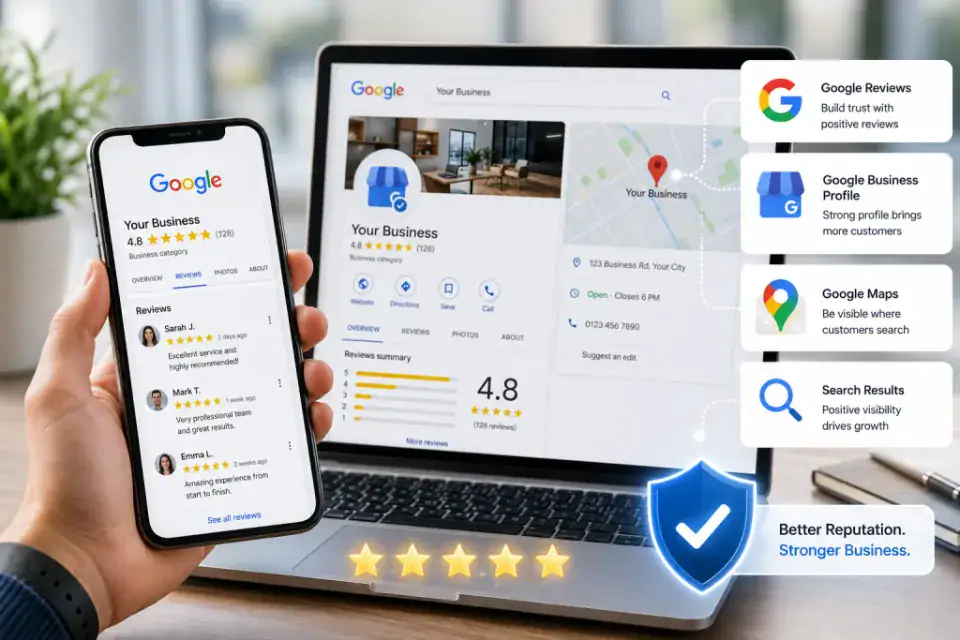
When a Facebook Page enables recommendations, the resulting star rating and written testimonials often become the first thing a customer sees. That makes them a target for fake reviews, competitor sabotage and reviews written by people who were never genuine customers at all. Meta's policies prohibit recommendations that are spam, that come from fake or coordinated accounts, or that contain harassment, hate speech or unlawful content — and each of these gives a legitimate basis for reporting. We assess every damaging recommendation against those criteria, gather the evidence, and report through the correct channel so Meta's reviewers can act on a clear, policy-referenced case rather than a vague complaint.
Where a recommendation is simply an unflattering but honest opinion, it will not qualify for removal — and pretending otherwise helps no one. In those situations we focus on encouraging authentic recommendations from real, satisfied customers and, where a Page has been overwhelmed by a coordinated attack, we can advise on temporarily disabling the recommendations tab while the underlying issue is resolved. The aim is a rating that reflects reality, not one distorted by bad actors.
Damaging comments, posts and defamatory content
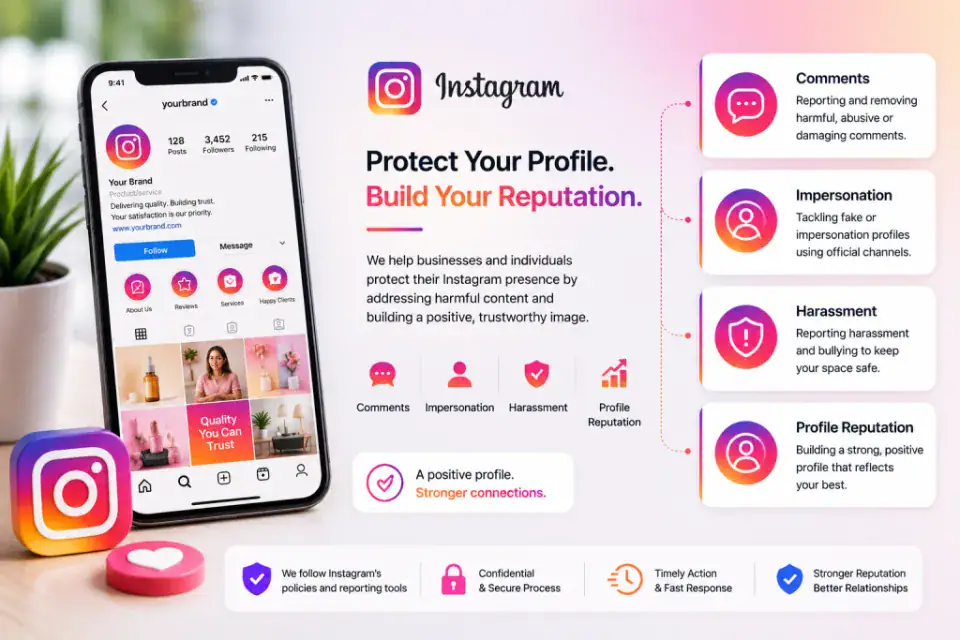
Harm on Facebook frequently arrives as a comment thread that turns abusive, a viral post making false claims, or a targeted campaign of harassment. The right response depends entirely on what the content actually is. Comments and posts that breach Meta's Community Standards — bullying, harassment, hate speech, threats, doxxing or coordinated inauthentic behaviour — can be reported through the three-dot menu on the individual item, with a precise explanation of which rule is broken and why. Reporting a specific comment rather than an entire post matters, because a well-targeted report is far more likely to succeed.
Content that is defamatory — a false statement of fact that damages your reputation — occupies a different track. Meta does not usually adjudicate defamation itself and instead directs UK complainants to a dedicated defamation reporting form, while serious cases may warrant legal escalation. We help preserve the evidence first: screenshots with visible dates, URLs and account details, captured before the poster can delete or edit. That record underpins any Meta report and, if needed, a solicitor's cease-and-desist letter or a court order compelling removal. Acting methodically protects your position far better than an angry reply that amplifies the very content you want gone.
Fake Pages, cloned profiles and impersonation accounts
Impersonation is one of the most damaging problems on Facebook because it hijacks trust you have spent years building. A cloned personal profile using your name and photos, or a fake Page pretending to be your business and misusing your logo, can defraud your contacts, solicit money or post content that appears to come from you. Meta's authenticity and impersonation policies are explicit: accounts that pretend to be another person or organisation are not permitted. We report impersonation through Facebook's dedicated impersonation channels, supplying identity verification where Meta requests it and clearly demonstrating the connection between the genuine account and the fake.
Speed and documentation are decisive here. We advise notifying your genuine audience quickly so contacts are not deceived while the report is processed, and we keep a full record of the imposter's activity in case escalation becomes necessary. Because fraudsters often rebuild after a takedown, we also monitor for repeat clones so each new attempt can be reported the moment it appears.
Harmful activity in Facebook Groups and communities
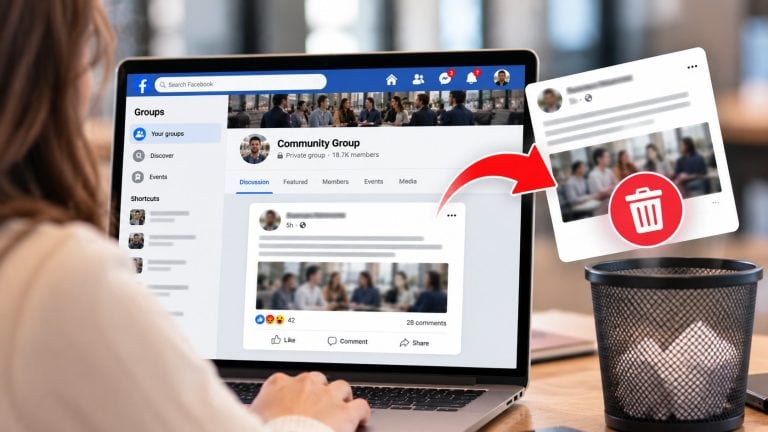
Some of the most persistent reputational damage happens inside Facebook Groups, where local community pages, industry forums and "name and shame" groups can circulate false claims well away from your own Page. Content in a Group is still bound by Meta's Community Standards, so genuinely violating posts — harassment, defamation dressed up as gossip, coordinated pile-ons — can be reported in the same structured way. Where you administer a Group, prevention is powerful: enabling post approval, keyword alerts for known problem phrases and membership screening stops much of the harm before it is published.
When damaging material sits in a Group you do not control, we work through the individual reporting routes and, where appropriate, engage the Group's own moderators, who often remove content that breaches their rules more quickly than a platform-wide report. The right combination depends on the Group's size, moderation culture and the severity of the content, which is why we assess each case on its own facts.
When removal isn't possible: ethical suppression and positive content
Not everything harmful can — or should — be removed. Honest criticism, lawful opinion and fair reporting are protected, and no ethical practitioner should try to erase them. Where content cannot be taken down, the answer is ethical suppression: strengthening the accurate, positive footprint around your name so that a single negative item no longer dominates the picture. On Facebook this means a well-maintained Page, consistent authentic posting, genuine engagement and encouraging real supporters to share their own experiences. Across the wider web it means ensuring credible, truthful content ranks prominently when people search for you.
We never use fake accounts, false reports, review incentives that breach Meta's rules, or manipulative tactics of any kind. That discipline is not only a matter of principle — it protects you, because platforms penalise inauthentic behaviour and a discovered manipulation campaign is itself a reputational catastrophe. Our work is built to withstand scrutiny.
Reputation in AI answers: ChatGPT, Gemini, Perplexity, Copilot, Claude and Grok
Reputation is no longer decided only on Facebook and search results. A growing share of people form their first impression through AI answer engines — asking ChatGPT, Google Gemini, Perplexity, Microsoft Copilot, Claude or Grok what they should think about a person or company. These systems draw on public content, including Facebook Pages, discussions and the articles that reference them, so unresolved defamation or a cloned Page can quietly shape the summary an AI produces. Because those answers are generated rather than simply linked, correcting the underlying record matters more than ever.
We factor answer-engine visibility into every Facebook reputation plan: removing policy-breaching content at source, publishing accurate and authoritative material that these models are likely to trust, and monitoring how your name is represented as AI tools increasingly mediate public perception. The goal is that when someone asks an AI about you, the response reflects the truth rather than the loudest bad actor.
Who we help across the UK
Our Facebook and Meta reputation work supports business owners, directors and professionals, public figures, charitable organisations and private individuals who have been targeted by online abuse — from a Manchester restaurant hit by a wave of fake recommendations to a London consultant facing an impersonation Page or a family dealing with defamatory posts in a local community Group. As a UK firm we work within UK law and Meta's global policies, and we tailor each strategy to the specific platform, the specific content and the outcome you actually need. Every case begins with a careful, honest assessment of what can realistically be achieved.
Facebook reputation management: frequently asked questions
Can you remove a negative Facebook review or recommendation?
We can seek removal of recommendations that breach Meta's policies — for example those that are fake, posted by coordinated or impersonating accounts, or that contain harassment, hate speech or unlawful content. Honest opinions from genuine customers do not qualify for removal, so in those cases we focus on encouraging authentic positive recommendations and, where a Page has been targeted by a coordinated attack, advising on options such as temporarily disabling the recommendations tab.
How do you deal with a fake or impersonation Facebook Page?
Impersonation breaches Meta's authenticity policies, so we report the fake profile or Page through Facebook's dedicated impersonation channels, providing identity verification where Meta requests it and clearly demonstrating the link between your genuine account and the imposter. We also advise alerting your real audience quickly and monitor for repeat clones, since fraudsters often try to rebuild after a takedown.
Can defamatory posts or comments be taken down?
Comments and posts that breach Meta's Community Standards — such as harassment, threats or hate speech — can be reported for removal directly. Defamation, meaning a false statement of fact that harms your reputation, is handled through Meta's defamation reporting route and may require legal escalation such as a cease-and-desist letter or a court order. We preserve dated evidence first so any report or legal step rests on a solid record.
What can be done about harmful content inside Facebook Groups?
Content in Groups is still bound by Meta's Community Standards, so genuinely violating posts can be reported through the individual reporting routes, and we can also engage a Group's own moderators, who often act faster on breaches of their rules. If you administer the Group, preventive controls such as post approval, keyword alerts and membership screening stop much of the harm before it appears.
Is your work compliant with Facebook's rules and UK law?
Yes. We work strictly within Meta's Community Standards and UK law, and we never use fake accounts, false reports, prohibited review incentives or any manipulative tactics. Our methods are designed to withstand scrutiny, which also protects you, because platforms penalise inauthentic behaviour and a discovered manipulation campaign is itself deeply damaging.
What happens if harmful content cannot be removed?
Where content is lawful opinion or fair criticism it will not be removed, and we would not attempt to erase it. Instead we use ethical suppression: building an accurate, positive footprint through a well-maintained Facebook presence, genuine engagement and credible content across the wider web, so that a single negative item no longer dominates how you are perceived — including in search results and AI-generated answers.